

Overview
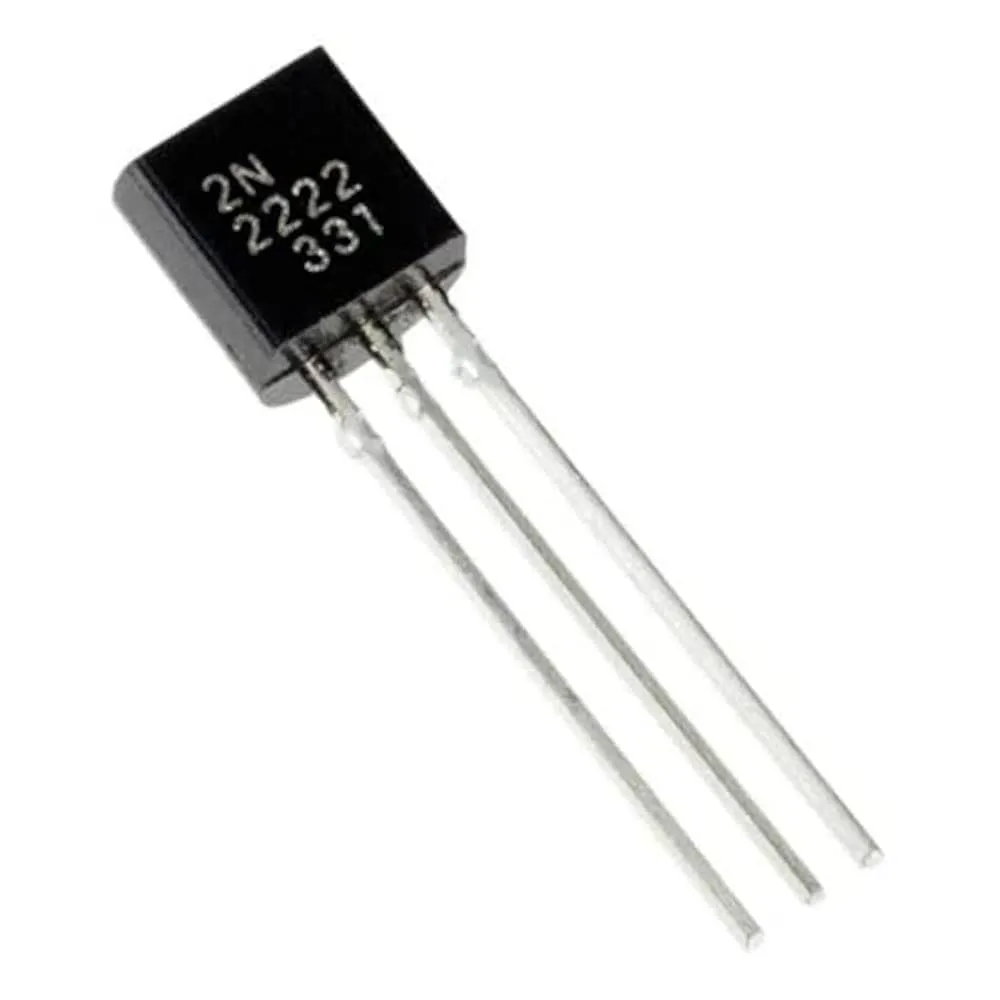
The 2N2222 NPN transistor is a widely used general-purpose bipolar junction transistor suitable for medium-power switching and linear amplification. With a maximum collector-emitter voltage of 60V and a maximum collector current of 0.8A, the 2N2222 provides greater drive capability than small-signal transistors such as the BC547 or BC548, while remaining compact and easy to prototype with in a TO-92 package.
Key Features
- NPN bipolar junction transistor for switching and amplification
- Collector-Emitter Voltage (Vce): 60V
- Collector Current (Ic): 0.8A maximum
- Maximum Power Dissipation: 500 mW
- DC Current Gain (hFE): typically 100 to 300 depending on operating point
- Package: TO-92 for easy mounting on breadboards and PCBs
- Fast switching suitable for PWM, digital logic, and some RF applications
Technical Specifications
- Transistor Type: NPN BJT
- Vce (max): 60 V
- Ic (max): 0.8 A
- Power Dissipation: 500 mW (ambient conditions, TO-92)
- hFE (DC Current Gain): 100 to 300 (varies with Ic and Vce)
- Package: TO-92 (through-hole)
Typical Applications
- General-purpose switching and small power amplification
- Relay and motor driver circuits (with appropriate base resistor and protection diodes)
- LED and lamp drivers
- PWM-based control systems for speed and brightness control
- Digital logic interfacing and level shifting
- Hobbyist robotics and automation projects
Using the 2N2222 in Circuits
When designing with the 2N2222, follow these practical guidelines:
- Always use a base resistor to limit base current and protect the transistor.
- For inductive loads such as relays or motors, place a flyback diode across the load to prevent voltage spikes from damaging the transistor.
- Keep the transistor within safe power dissipation limits; add heat sinking or use a different package if you need higher power handling.
- For switching applications, drive the base hard enough to saturate the transistor for low Vce(sat), but avoid excessive base current that may exceed the transistor limits.
Examples
- Driving a relay: use base resistor, flyback diode, and ensure Ic is within 0.8A limit.
- LED driver: use a resistor in series with the LED and select base resistor to switch fully.
- Simple amplifier: bias the transistor in the linear region and use coupling capacitors as needed.
Package and Prototyping
The TO-92 package makes the 2N2222 convenient for breadboard testing and straightforward PCB mounting. Pinouts may vary by manufacturer, so always check the datasheet for pin orientation when replacing parts.
Ordering and Notes
- Common, cost-effective transistor for education, prototyping, and production.
- Check manufacturer datasheets for specific curves, ratings, and guaranteed hFE ranges.
- Images are for illustration purposes only.
Should I use the 2N2222 or the BC547 in my project?
Use the 2N2222 when your load needs more current or voltage, and the BC547 for small-signal work. The 2N2222 handles up to 0.8A collector current and 60V collector-emitter voltage, while the BC547 is rated at 0.3A and 50V.
In practice, this means:
- Relays, small motors, lamps and PWM drivers: the 2N2222 gives you more headroom.
- Audio preamplifiers, sensor front-ends and low-noise signal work: the BC547 is the better fit.
- Breadboard projects: both come in a TO-92 package, so either drops into the same holes.
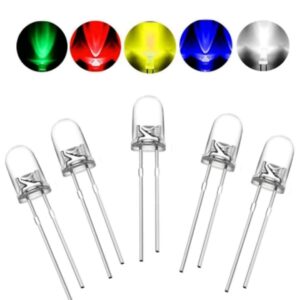
Both parts are listed at Rs. 7, checked in October 2026, so cost is not the deciding factor. Pick by current and voltage, not price. If you are driving an LED from a microcontroller pin, pair the transistor with a 5mm LED and a base resistor. For a low-current alternative, see the BC547 NPN transistor. You can also browse the full accessories range for resistors, diodes and switches.
How do I wire the 2N2222 into a breadboard circuit?
Place the transistor so its three legs sit in separate rows, then identify emitter, base and collector from the datasheet before you power anything. Pin order can differ between manufacturers, so never assume it matches the last part you used.
- Connect the emitter to ground.
- Feed the base through a resistor from your Arduino, ESP32 or Raspberry Pi pin.
- Connect the collector to the load, and the load’s other side to the positive supply.
- For relays, motors or other inductive loads, add a flyback diode across the load.
Keep the current within the 0.8A limit and the power within 500 mW. If the transistor runs hot, the load is too heavy for this package. A tactile push button switch makes a simple input for testing a switching circuit by hand.
Frequently Asked Questions
Is the 2N2222 NPN transistor in stock at College Road Electronics?
Stock changes often, so check the product page for the current status before you plan a build. If it shows out of stock, message the shop to ask when the next batch arrives. College Road Electronics is on College Road, Rawalpindi, and delivers nationwide across Pakistan at a flat shipping rate of Rs 350.
How much does the 2N2222 NPN transistor cost?
The 2N2222 NPN transistor is listed at Rs. 7, checked in October 2026. At that price it is worth keeping a few spare in your parts box, since a blown transistor mid-project can stall a demo. Shipping is a flat Rs 350 across Pakistan, so combine it with other parts in one order.
Can the 2N2222 switch a relay or a small motor?
Yes, within its limits. It handles up to 0.8A collector current and 60V collector-emitter voltage, which covers many small relays and low-power motors. Always use a base resistor and a flyback diode across the coil or motor. If the load draws more than 0.8A or the transistor gets hot, use a bigger driver instead.
What is the difference between the 2N2222 and the BC547?
The 2N2222 is rated at 60V and 0.8A, while the BC547 is rated at 50V and 0.3A. The 2N2222 suits relays, motors and PWM switching where more current flows. The BC547 is quieter and better for audio preamplifiers and small-signal work. Both come in a TO-92 package and are listed at Rs. 7.
Does College Road Electronics deliver the 2N2222 across Pakistan?
Yes. College Road Electronics delivers nationwide across Pakistan at a flat shipping rate of Rs 350. The shop is based on College Road, Rawalpindi, and supports school, college and university students with parts and guidance for their projects. Order the transistor together with resistors and diodes to save on shipping.




Reviews
There are no reviews yet