
Advanced Robotics & Arduino Kits
Showing all 7 resultsSorted by popularity
- Advanced Robotics & Arduino Kits
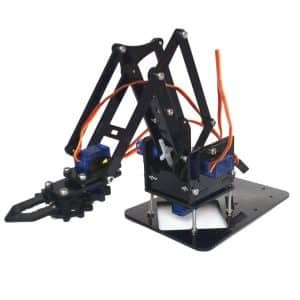
4DOF Acrylic Robotic Arm Chassis DIY Kit (Unassembled)
- 4 Degrees of Freedom (4DOF) for versatile arm movement and complex tasks.
- Durable, lightweight acrylic construction for stability and easy handling.
- Modular design allows customization and expansion for prototypes.
- Compatible with Arduino, Raspberry Pi and other popular microcontrollers.
- Ideal for education, research, and DIY robotics projects.
- Ships un-assembled with pre-cut parts, screws, fasteners and instructions.
SKU: n/a - Advanced Robotics & Arduino Kits
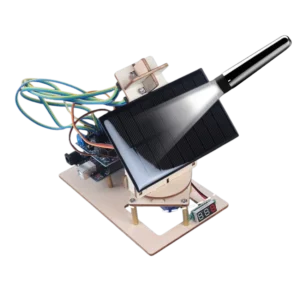
Smart Solar Tracker 2-Axis DIY Kit – DIY STEM Light Tracking (Unassembled)
 Advanced Robotics & Arduino Kits
Smart Solar Tracker 2-Axis DIY Kit – DIY STEM Light Tracking (Unassembled)
- Dual-axis solar tracking with 2 servo motors that automatically follows the strongest light source in real time
- Solar panel converts light to electrical energy with digital tube voltage display showing live power output
- Photosensitive resistance sensors (LDRs) detect light intensity from multiple directions for precise orientation
- Laser-cut wooden frame for clean, sturdy construction with easy no-soldering, plug-in wiring assembly
- Arduino UNO compatible, open-source C code included, multi-project tutorials from basic to advanced
SKU: n/a - Advanced Robotics & Arduino Kits
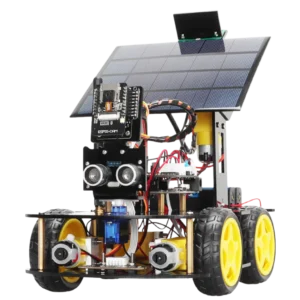
ESP32 CAM Solar Robot Car Kit – 4WD Arduino WiFi Camera (Unassembled)
Advanced Robotics & Arduino KitsESP32 CAM Solar Robot Car Kit – 4WD Arduino WiFi Camera (Unassembled)
- ESP32-CAM WiFi module with real-time video streaming to your phone or PC (no app needed, works via browser)
- 6V 1W solar charging panel with photosensitive tracking gimbal and digital voltage monitoring
- Ultrasonic obstacle avoidance with 180° servo scanning, plus ultrasonic obstacle avoiding modes
- 4WD chassis with four geared motors (200 RPM)
SKU: n/a - Advanced Robotics & Arduino Kits
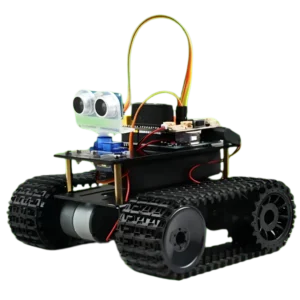
Bluetooth Panther Tank Chassis Kit – Arduino Smart Robot Car
- Rugged tracked tank chassis with metal frame, dual DC motors, and caterpillar rubber tracks for all-terrain movement
- Bluetooth smartphone control (iOS & Android) plus infrared remote included for dual control options
- Ultrasonic obstacle avoidance with servo-mounted HC-SR04 sensor scanning 180° in three directions
- 8×16 LED matrix panel with animated face expressions, line tracking, and light following modes
- Dual programming: Arduino IDE (C/C++) and Mixly visual block coding with 15 tutorial projects included
SKU: n/a - Advanced Robotics & Arduino Kits
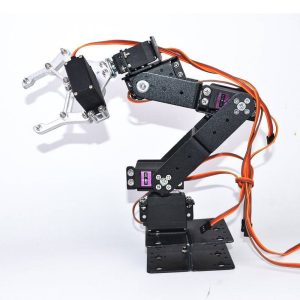
Mechanical Robotic Arm Chassis Kit (6DOF) (Un-Assembled)
– Build a 6-degree-of-freedom mechanical robotic arm chassis for DIY and prototyping projects
– Precision anodized aluminum parts and high-precision gears for smooth motion
– Reinforced steel joints and hardened steel shafts for payloads up to 500 g
– Unassembled kit with step-by-step guides for hands-on learning
– Quick-release mounts and modular brackets for easy customization
– Ideal for education, hobbyists, and robotics prototypingSKU: n/a - Advanced Robotics & Arduino Kits
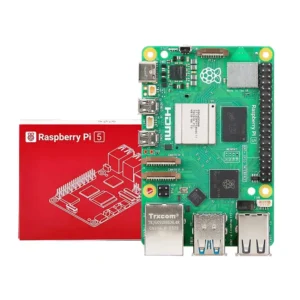
Raspberry Pi 5 Complete Kit (4GB/8GB) with F240 Component Box
.wa-price-card{--wa-green:#25D366;--wa-green-dark:#1ebe57;--wa-green-glow:rgba(37,211,102,0.25);font-family:system-ui,-apple-system,sans-serif;background:#f0faf3;border:1.5px solid #d4f0dd;border-radius:14px;padding:22px 24px;display:flex;align-items:center;justify-content:space-between;gap:20px;transition:border-color 0.3s,box-shadow 0.3s;box-sizing:border-box;margin:15px 0;width:100%}.wa-price-card:hover{border-color:var(--wa-green);box-shadow:0 4px 24px var(--wa-green-glow)}.wa-price-card .wa-icon-circle{width:52px;height:52px;min-width:52px;border-radius:50%;background:var(--wa-green);display:flex;align-items:center;justify-content:center;box-shadow:0 4px 14px var(--wa-green-glow);flex-shrink:0}.wa-price-card .wa-icon-circle svg{width:26px;height:26px;fill:#fff}.wa-price-card .wa-text{flex:1;min-width:0}.wa-price-card .wa-text h4{font-size:15px;font-weight:700;color:#1a2e1f;margin:0 0 3px 0;line-height:1.3}.wa-price-card .wa-text p{font-size:12.5px;font-weight:500;color:#4a6b52;line-height:1.4;margin:0}.wa-price-card .wa-btn{display:inline-flex;align-items:center;gap:8px;background:var(--wa-green);color:#fff !important;font-family:inherit;font-size:14px;font-weight:700;padding:12px 24px;border:none;border-radius:50px;cursor:pointer;text-decoration:none !important;white-space:nowrap;line-height:1;overflow:visible;transition:background 0.2s,transform 0.15s,box-shadow 0.2s;flex-shrink:0}.wa-price-card .wa-btn:hover{background:var(--wa-green-dark);color:#fff !important;transform:translateY(-1px);box-shadow:0 6px 20px var(--wa-green-glow)}.wa-price-card .wa-btn:active{transform:translateY(0)}.wa-price-card .wa-btn svg{width:18px;height:18px;min-width:18px;fill:#fff;flex-shrink:0}@media(max-width:520px){.wa-price-card{flex-direction:column;text-align:center;padding:20px;gap:14px}.wa-price-card .wa-btn{width:100%;justify-content:center}}
Get PricePrices are updating frequently
Contact us on WhatsApp to get the current price & availability
– All-in-one Raspberry Pi 5 kit with choice of 4 GB or 8 GB RAM
– Includes 5V 5A USB-C power supply, ABS case, heatsink and cooling fan
– 32GB high-speed microSD card and micro-HDMI to HDMI cable included
– GPIO header extension and jumper wires for electronics projects
– F240 modular component box for organizing resistors, LEDs, sensors and modules
– Ready for prototyping, learning, media, IoT, robotics and retro gamingSKU: n/a - Advanced Robotics & Arduino Kits
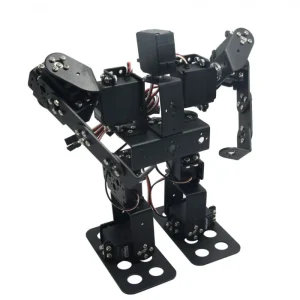
9 DOF DIY Arduino Compatible Humanoid Robot
- 9 Degrees of Freedom for realistic biped movement and balance
- Durable 9 DOF robot chassis built for strength and control
- Fully Arduino compatible for easy coding and customization
- Complete DIY kit with all parts included for quick assembly
- Ideal educational robotics kit for students, hobbyists and schools in Pakistan
- Teaches motion control, servo programming, kinematics and mechanics
SKU: n/a
Advanced robotics and Arduino kits are for students who are ready to write the code themselves. These are programmable platforms, not fixed toys. The same chassis can follow a line, avoid an obstacle, take Bluetooth commands from a phone, or run a routine the student invented, depending entirely on what gets uploaded to the board.
That is the real difference at this level. A kit here is not finished when it is assembled. Assembly is where the project begins. This is where a student stops being someone who builds things and starts being someone who makes things do what they want.
What is inside an advanced kit
- Arduino kits and trainer boards. Upgraded and complete Arduino kits with a full component range, plus trainer boards for structured learning and lab work.
- ESP32 and IoT kits. WiFi and Bluetooth enabled development kits for projects that connect to a network, a phone or the internet.
- Programmable robot platforms. ESP Panther tank robots, programmable 2WD and 4WD robot cars, and Bluetooth controlled robots that respond to commands from an app.
- Robotic arms. 4DOF and 6DOF robotic arm kits driven by servo motors, for students learning precise multi joint control.
- Single board computers. Raspberry Pi complete kits for projects that need real computing power, a display or camera vision.
Who these kits are for
- Students who are comfortable with basic electronics and ready to program
- Anyone building a science exhibition entry, a competition robot or a final project
- Robotics clubs and school labs that need a real, extensible platform rather than a single use model
- Hobbyists and makers working with Arduino, ESP32 and Raspberry Pi
- Self taught learners who want a platform they will not outgrow in a month
Skills you build at this level
Writing, compiling and uploading Arduino code. Wiring sensors, motor drivers and power correctly. Working with WiFi and Bluetooth modules and sending data between a robot and a phone. Controlling servo motors for precise robotic arm movement. Reading a datasheet, and debugging a project that does not work the first time, which it usually will not, and that is the point.
Frequently asked questions
Do I need programming experience before buying an advanced kit?
Some is strongly recommended. These kits assume the student is willing to write and upload code. If they have never programmed at all but are motivated and have done sensor based projects before, an Arduino kit is a reasonable place to learn, since the Arduino language is beginner friendly and there is an enormous amount of free material online. If they have never touched electronics either, start one level down.
What is the difference between Arduino, ESP32 and Raspberry Pi?
Arduino is a microcontroller, best for controlling motors, sensors and hardware directly and reliably. ESP32 is a microcontroller with WiFi and Bluetooth built in, so it is the right choice for IoT and any project that needs to connect to a phone or network. Raspberry Pi is a full computer running an operating system, suited to projects needing a screen, a camera, heavier processing or vision. Many serious projects use more than one.
Is soldering required for these kits?
It depends on the kit. Many use breadboards and jumper wires with no soldering at all, while some robot platforms and boards benefit from soldered connections for reliability. Each product page states what is involved.
Are these suitable for a final year or semester project?
Yes. Programmable robot platforms, robotic arms and ESP32 IoT kits are commonly used as the hardware base for university level projects, because they are extensible and the student can genuinely claim the logic as their own work. If you are building a specific project and are unsure which platform fits, contact us before ordering.
How many degrees of freedom does a robotic arm need?
A 4DOF arm handles pick and place tasks and is easier to program and cheaper to run, which makes it a sensible first robotic arm. A 6DOF arm can approach an object from more angles and reach positions a 4DOF arm cannot, at the cost of more complex control. Start with 4DOF unless the project specifically demands the extra range.
Does the kit include everything, or do I need extra parts?
Complete kits include the board, sensors and components listed on the product page. Chassis and platform kits are intended to be built on and may need a controller board or battery pack. Check the product description, and if you are unsure what a build requires, ask us and we will tell you plainly.
This looks like a step too far. What should I get instead?
There is no benefit in buying above a student’s level, since an unused kit teaches nothing. If they are not yet coding, our Intermediate STEM & Electronics Kits teach sensors and circuits first, which is the foundation this level assumes you already have.