
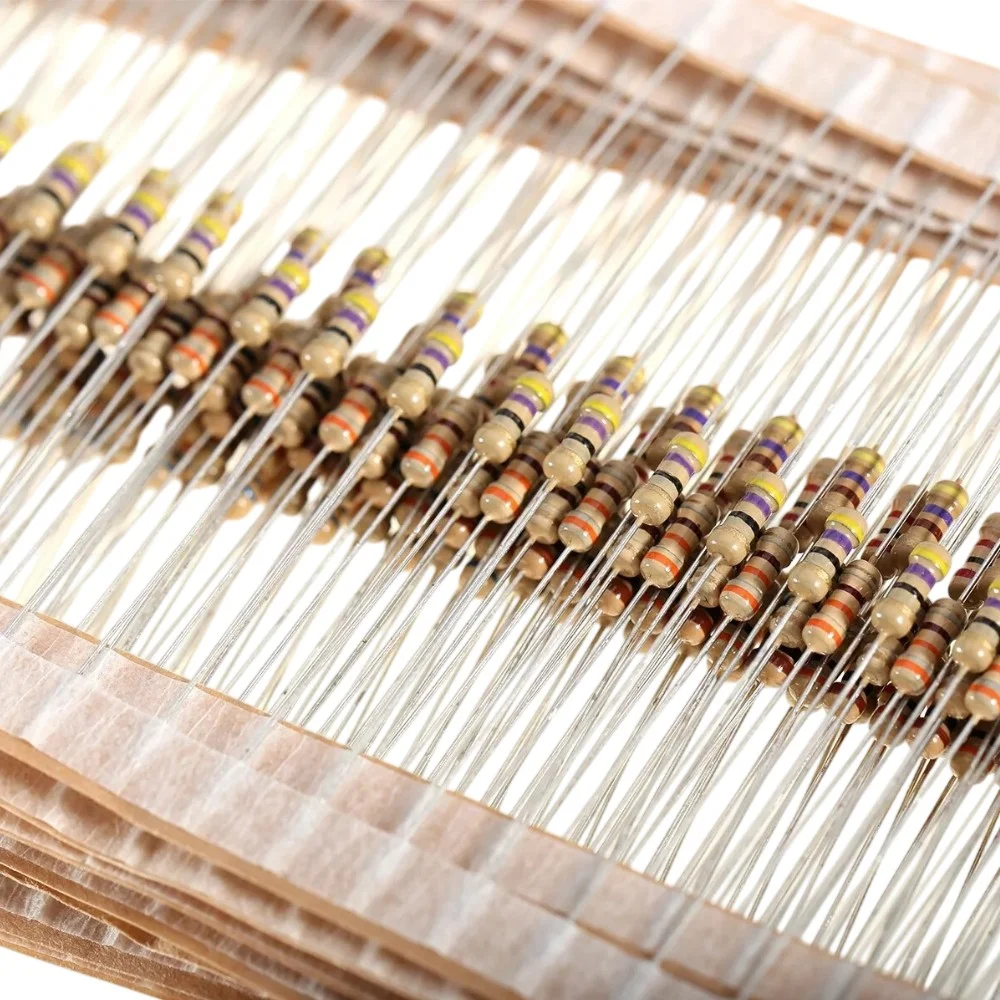

The Metal Film Resistors (1Ω – 820Ω) (1/4 Watt) deliver high-precision performance for professional and hobbyist electronics projects. Manufactured using advanced metal film technology, these through-hole resistors provide excellent accuracy, minimal electrical noise, superior temperature stability, and long-term reliability that exceeds standard carbon film alternatives. Whether you’re building Arduino projects, designing power supplies, or creating LED circuits, these resistors offer the quality and consistency your applications demand.
Available in resistance values spanning 1Ω to 820Ω, these 0.25W (1/4 Watt) components are perfectly suited for current limiting, voltage division, pull-up and pull-down networks, signal conditioning, LED protection, sensor interfacing, and general-purpose circuit design. Their compact axial lead configuration makes them compatible with breadboards, PCB assemblies, prototyping platforms, educational kits, and commercial electronic devices.
Key Features of Metal Film Resistors
- High-quality metal film construction for superior performance
- Resistance range from 1Ω to 820Ω covering common circuit requirements
- Power rating of 1/4 Watt (0.25W) for standard applications
- High accuracy and exceptional stability over time
- Low electrical noise characteristics for sensitive circuits
- Excellent temperature performance across wide operating ranges
- Through-hole axial lead design for universal compatibility
- Suitable for both breadboard prototyping and PCB mounting
- Extended operational lifespan with minimal drift
- Ideal for professional engineering and DIY electronics projects
Technical Specifications
- Product Type: Metal Film Resistor
- Resistance Range: 1Ω to 820Ω
- Power Rating: 0.25W (1/4 Watt)
- Resistor Technology: Metal Film
- Mounting Type: Through-Hole
- Lead Type: Axial
- Tolerance: Typically ±1% to ±5% (varies by manufacturer)
- Temperature Coefficient: Typically ±50 to ±100 ppm/°C (varies by manufacturer)
- Body Type: Cylindrical
- Operating Temperature: Typically -55°C to +155°C
- RoHS Compliant: Yes (varies by manufacturer)
How Metal Film Resistors Work
A resistor functions by limiting the flow of electric current through a circuit, providing a specific amount of electrical resistance. As current passes through the resistor, a portion of the electrical energy is converted into heat, enabling precise control of voltage and current levels within your design.
Metal film resistors are manufactured by depositing a thin, uniform layer of metal film onto a ceramic core substrate. This advanced manufacturing process delivers several performance advantages:
- High precision resistance values with tight tolerances
- Excellent long-term stability with minimal value drift
- Low noise characteristics critical for audio and sensor applications
- Improved temperature stability across varying conditions
- Superior reliability compared to carbon film resistors
Available Resistance Values
This product category includes metal film resistors with values spanning 1Ω to 820Ω, covering the most commonly used resistance values in electronic circuit design. Select the specific value that matches your circuit requirements, whether for current limiting, voltage division, or impedance matching applications.
Common Applications
- Arduino, Raspberry Pi, and microcontroller projects
- LED current limiting and protection circuits
- Voltage divider networks for signal scaling
- Sensor signal conditioning and interfacing
- Pull-up and pull-down resistor networks
- Audio electronics and amplifier circuits
- Power supply filtering and regulation
- Embedded system design and development
- Educational electronics and STEM projects
- PCB manufacturing, repair, and prototyping
Advantages Over Carbon Film Resistors
- Higher precision and tighter tolerance specifications
- Significantly lower electrical noise generation
- Exceptional temperature stability across operating ranges
- Superior long-term reliability with minimal value drift
- Compact through-hole design for space-efficient layouts
- Easy to solder with standard electronics assembly techniques
- Suitable for both professional manufacturing and hobby projects
- Comprehensive range of resistance values available
Usage Tips and Best Practices
- Select the correct resistance value according to your specific circuit design requirements and calculations
- Ensure the resistor’s power dissipation does not exceed 0.25W to prevent overheating and failure
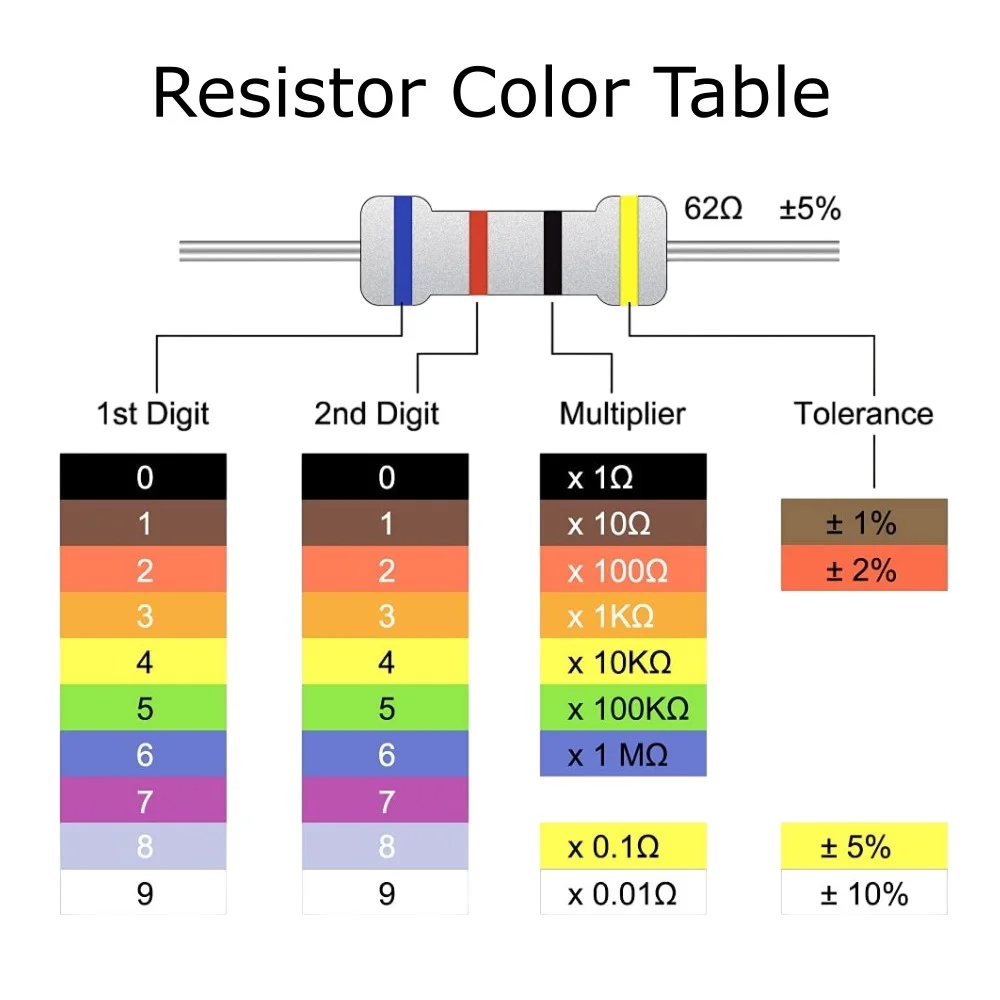
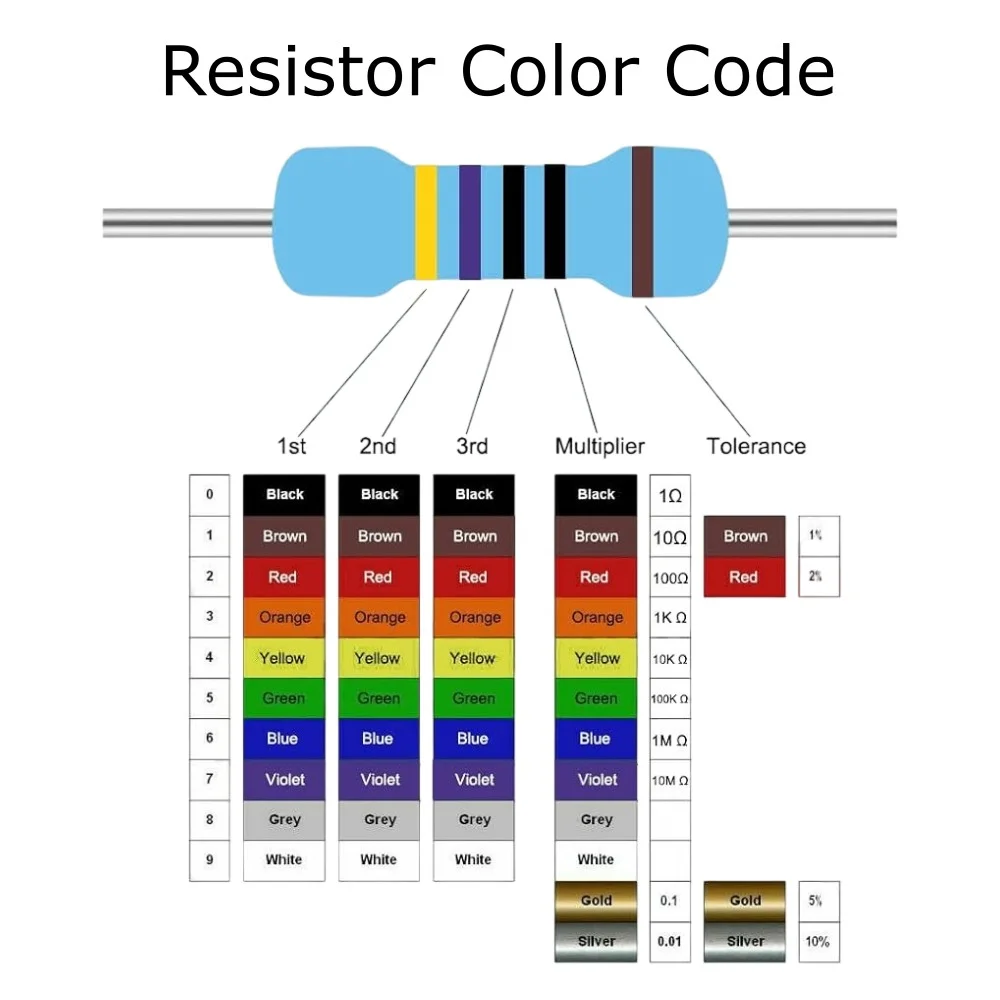
- Verify the resistor value using the color band code or a multimeter before installation in your circuit
- Avoid prolonged exposure to excessive heat during soldering, which may damage the resistor or alter its value
- Store resistors in a dry, cool environment to maintain optimal performance and prevent corrosion
- Use appropriate resistor values for current-limiting and voltage-divider applications based on Ohm’s Law calculations
- Allow adequate spacing around resistors on PCBs to facilitate heat dissipation







Reviews
There are no reviews yet