
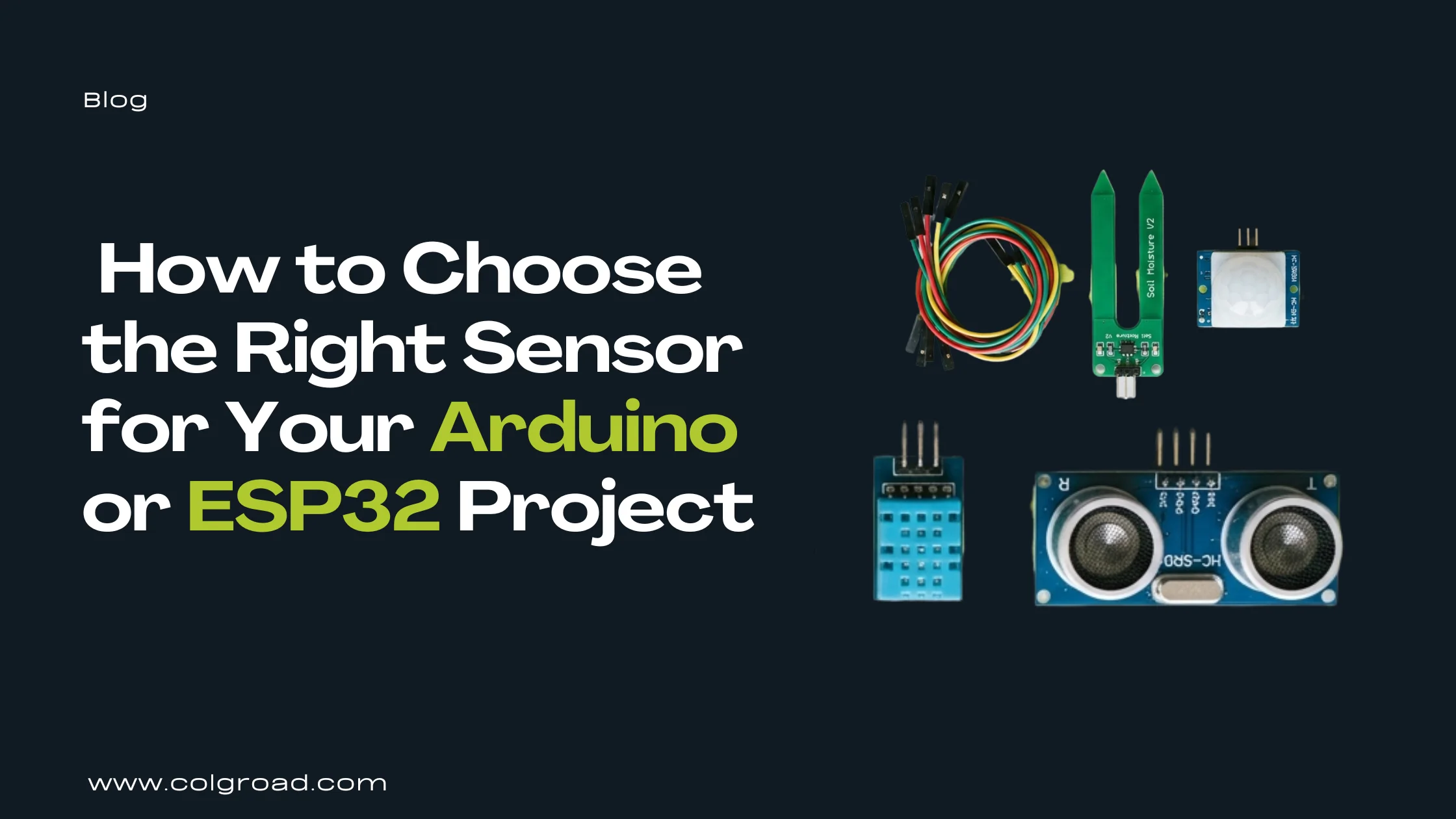
A sensor is what gives your project awareness of the world around it. Without one, a microcontroller can only follow fixed instructions. Add the right sensor and suddenly your Arduino can measure temperature, detect motion, read distance, sense gas leaks, or know when the soil is dry. The challenge for most beginners is not wiring or code, it is simply knowing which sensor to buy for the job. This guide walks you through the most useful sensors for hobby and student projects in Pakistan and helps you match each one to what you actually want to build.
First, Understand the Two Types of Sensors
Almost every sensor you will use falls into one of two groups, and knowing the difference saves you a lot of confusion when you start wiring.
Analog sensors output a continuously changing voltage. The value rises and falls smoothly, so you read them on an analog pin (A0, A1 and so on) using analogRead(). Examples include the LDR light sensor, soil moisture sensor, and many gas sensors.
Digital sensors output a clear on or off signal, or send data using a protocol such as I2C or one-wire. You read them on a digital pin with digitalRead(), or through a library. Examples include the PIR motion sensor, ultrasonic sensor, and the DHT temperature and humidity sensor.
If you are using an ESP32 instead of a classic Arduino Uno, keep in mind that its analog pins read a slightly different voltage range and some pins are input only. The sensors below all work with both boards, but a quick check of your board's pinout before wiring is always worth the minute it takes.
The Essential Sensors, Grouped by What They Do
1. Measuring distance and detecting obstacles
If your project needs to know how far away something is, or simply whether something is in front of it, you have two affordable and reliable options.
The HC-SR04 ultrasonic sensor measures distance by sending out a sound pulse and timing how long it takes to bounce back. It is accurate from a few centimeters out to around four meters, which makes it the standard choice for obstacle avoiding robots, parking assist projects, water tank level monitors, and automatic dustbins.
The IR infrared obstacle sensor is simpler and cheaper. It does not measure exact distance, it just tells you whether an object is within its short detection range. That makes it perfect for line following robots, edge detection, and basic object counters where you only need a yes or no answer.
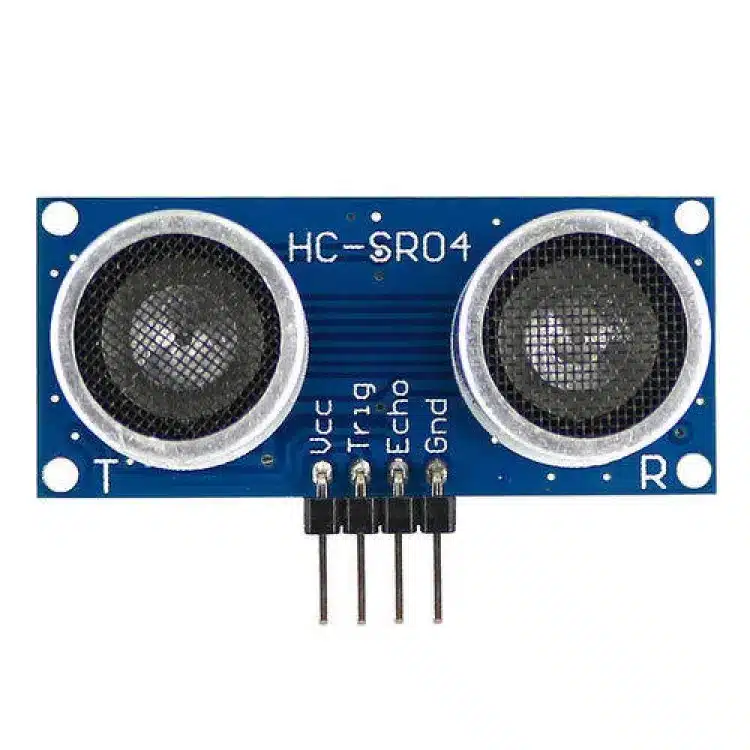
HC-SR04 Ultrasonic Distance Sensor
Non contact distance measurement from 2 cm to 400 cm. The go to sensor for robots, level monitoring, and proximity projects. Easy to use with the standard NewPing library.
View Product2. Reading temperature and humidity
Weather stations, smart greenhouse projects, incubator monitors, and home automation builds all need to sense the environment. The most popular starting point is the DHT11 or its more accurate sibling, the DHT22. Both measure temperature and humidity from a single module and report digital readings, so you avoid the noise that comes with analog sensors.
If you only need temperature and want better precision, the LM35 or a DS18B20 probe is a strong choice. The DS18B20 comes in a waterproof version, which is exactly what you want for measuring liquid or soil temperature.
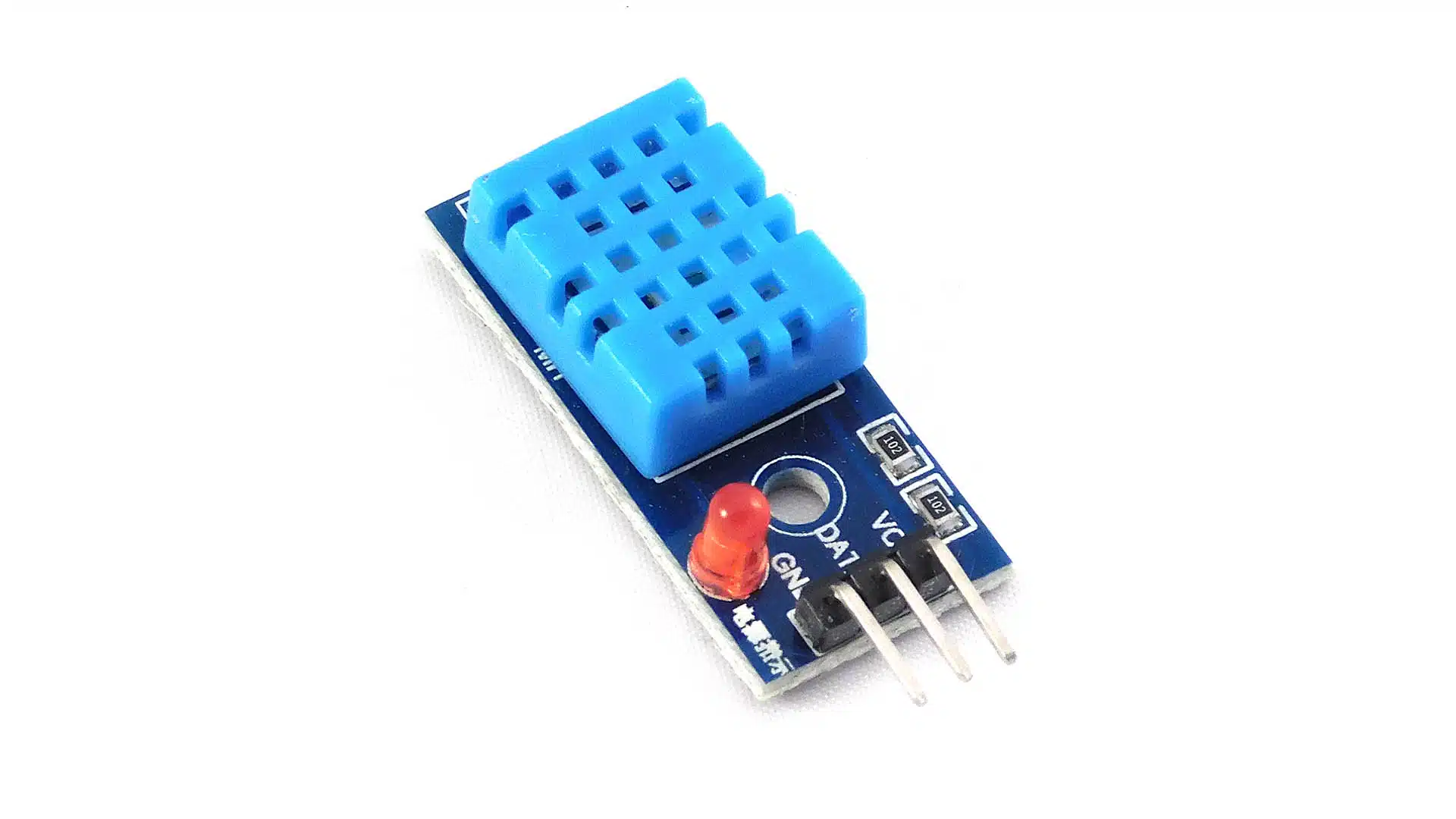
DHT11 Temperature and Humidity Sensor
Single module digital readout for both temperature and humidity. Ideal for weather stations, greenhouse and incubator monitors, and beginner IoT dashboards with ESP32.
View Product3. Detecting movement and orientation
To detect a person walking into a room, the PIR motion sensor (HC-SR501) is the standard. It senses the infrared heat that bodies give off and triggers a simple high signal when motion is detected. This is the heart of automatic lighting, security alarms, and visitor counters.
If instead you need to sense how your project itself is moving or tilting, the MPU-6050 combines a three axis accelerometer and gyroscope on one tiny board. It is the sensor behind self balancing robots, drones, gesture controllers, and motion based game controllers.

PIR Motion Sensor (HC-SR501)
Detects human movement up to around 7 meters with adjustable sensitivity and delay. The core component for automatic lighting, alarms, and presence detection projects.
View Product4. Sensing gas, smoke, flame, and rain
Safety and detection projects are favourites at science exhibitions. The MQ series gas sensors cover different targets: the MQ-2 detects smoke and combustible gas, the MQ-135 is used for air quality, and others target specific gases. Pair one with a buzzer and you have a working leak or smoke alarm.
A flame sensor detects the infrared light from fire and is great for fire alarm demonstrations, while a rain sensor detects water on its surface and is used in automatic window or clothesline projects. These are low cost analog or digital modules that make a big visual impression in a demo.
5. Reading light and soil moisture
For light based projects such as automatic street lights or a day and night detector, the LDR (photoresistor) is the simplest and cheapest sensor available. Its resistance changes with brightness, so you read it on an analog pin with a single resistor.
For any plant, garden, or smart irrigation project, the soil moisture sensor tells you how wet the soil is so your system can water only when needed. This is one of the most popular final year project sensors because it solves a real and relatable problem.
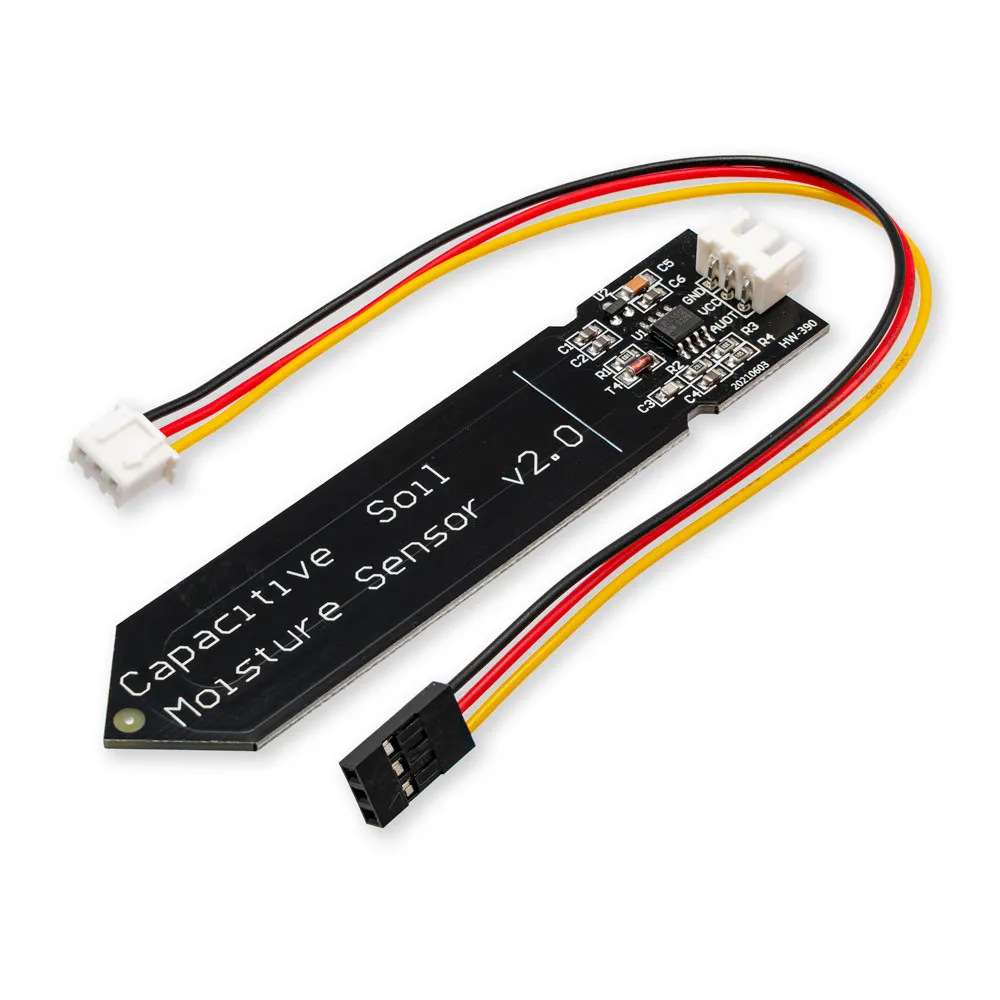
Soil Moisture Sensor Module
Measures how dry or wet soil is and outputs both analog and digital signals. The foundation of automatic plant watering and smart agriculture projects.
View ProductQuick Comparison: Match the Sensor to Your Project
| If you want to... | Use this sensor | Signal type |
|---|---|---|
| Measure exact distance | HC-SR04 Ultrasonic | Digital |
| Detect a nearby object (yes or no) | IR Obstacle Sensor | Digital |
| Read temperature and humidity | DHT11 or DHT22 | Digital |
| Sense human movement in a room | PIR (HC-SR501) | Digital |
| Track tilt, motion, or balance | MPU-6050 | I2C |
| Detect smoke or gas leaks | MQ-2 / MQ-135 | Analog and digital |
| Detect fire | Flame Sensor | Analog and digital |
| Measure light level | LDR Photoresistor | Analog |
| Check soil moisture for plants | Soil Moisture Sensor | Analog and digital |
Three Things to Check Before You Buy
Operating voltage. Most of these sensors run on 3.3V or 5V. The Arduino Uno is a 5V board, while the ESP32 works at 3.3V. Confirm your sensor and board match, or use a logic level shifter where needed.
Output type. Decide whether your project needs a simple on or off reading (digital) or a measured value (analog). This tells you which pin to wire to and which code to write.
Library support. Popular sensors such as the DHT, HC-SR04, and MPU-6050 have well documented Arduino libraries, which makes them far easier for beginners than obscure modules with little online support.
Many gas and analog sensors need a short warm up time and stable power to give accurate readings. Powering them from a weak source, such as a laptop USB port that is already running other modules, often causes jumpy values. When in doubt, give your sensors a separate, stable 5V supply.
Putting It Together
The best way to learn sensors is to start with one clear project and add from there. A beginner can build an automatic light using a PIR sensor in an afternoon. A student can combine a soil moisture sensor with a relay and a small pump to create a self watering plant for a final year project. An ESP32 paired with a DHT22 becomes a live temperature dashboard you can read from your phone. Each of these uses just one or two sensors from the list above.
If you have already read our guides on Arduino and ESP32 boards for students and adding wireless communication to your project, sensors are the natural next layer. The board runs the logic, the sensor gathers the data, and a wireless module sends it where you need it.
Browse all sensors and modules »Building something this season?
Explore our full collection of sensors and modules, all in stock and ready to ship across Pakistan.
Need help choosing the right one for your project? Reach out and our team will guide you.
