
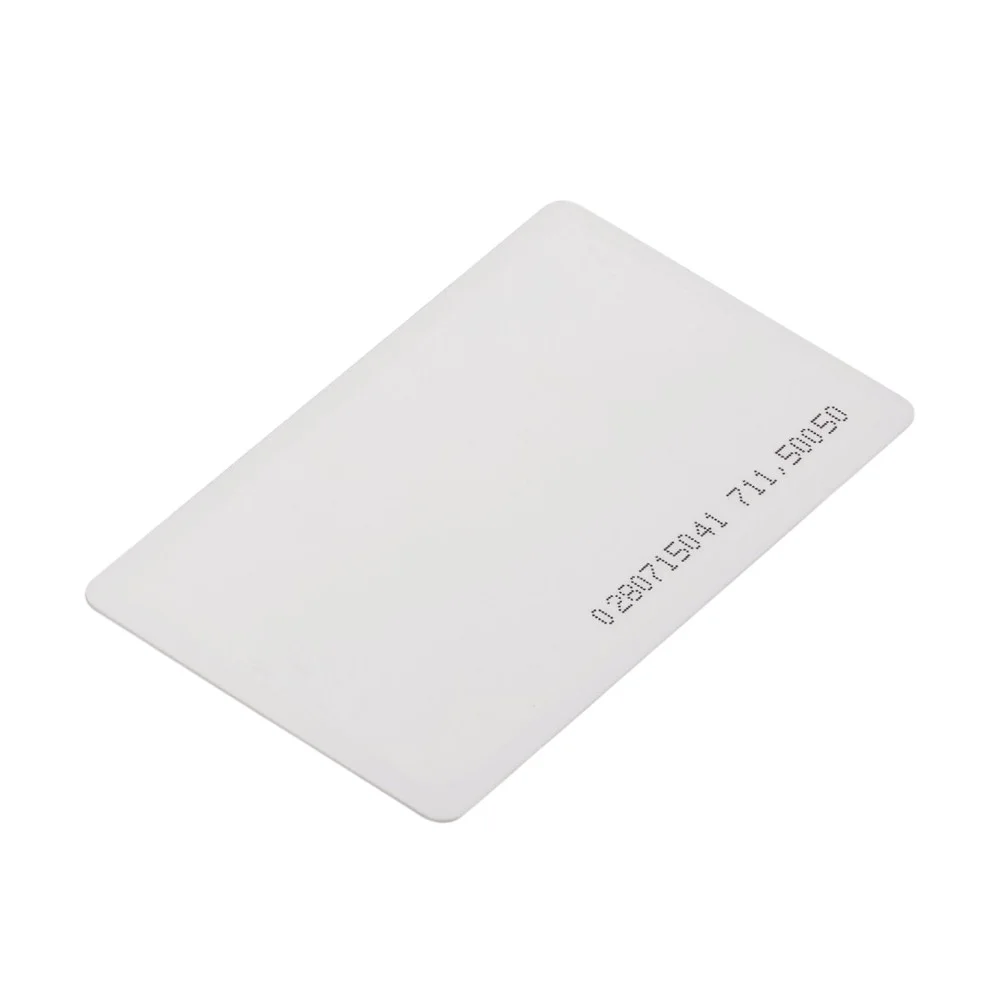
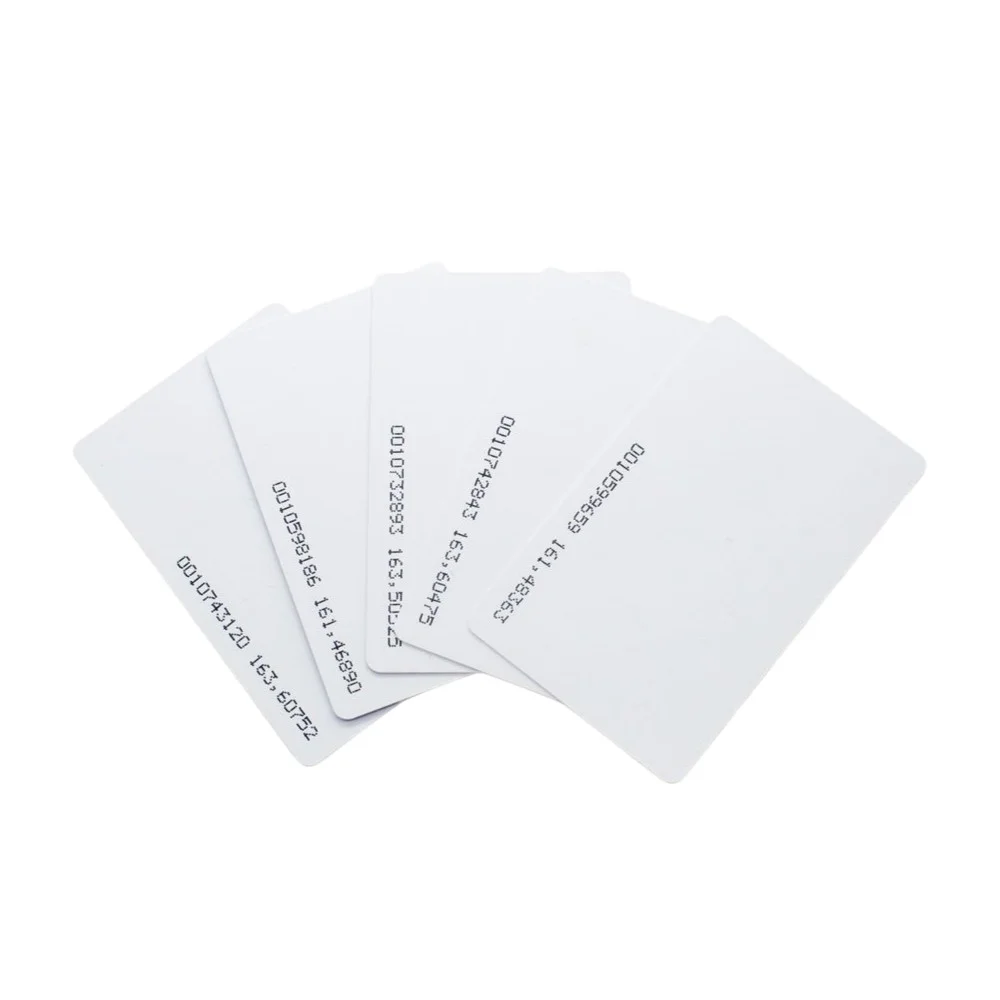

The 125kHz RFID Classic Plain White Card is a passive, contactless 125kHz RFID card for access control, attendance and Arduino, ESP32 or IoT projects. It needs no battery and costs Rs. 50, checked in September 2026. Buy it if your reader is a 125kHz reader, not a 13.56MHz or NFC one.
Product Overview
The 125kHz RFID Classic Plain White Card is a passive contactless RFID identification card made for compatible 125kHz RFID readers and access-control systems. Its standard card format makes it a practical choice for identification, attendance tracking, security, and automation tasks, and its plain white finish keeps it ready for labeling or branding.
The card works wirelessly and needs no internal battery. Bring it close to a compatible 125kHz RFID reader and the card is detected, allowing the connected system to read its identification data and act on it.
Key Features of This 125kHz RFID Card
- 125kHz low-frequency RFID card
- Passive, contactless operation
- Plain white card design
- Standard credit-card style form factor
- No battery or external power required
- Designed for compatible 125kHz RFID readers
- Lightweight and easy to carry
- Suited to access-control and identification systems
- Useful for Arduino, ESP32, and other RFID projects
- Plain surface suitable for labeling or customization
Technical Specifications
- Product Type: RFID Smart or Proximity Card
- Operating Frequency: 125kHz
- RFID Technology: Low-Frequency (LF) RFID
- Communication: Contactless
- Power: Passive, powered by the RFID reader’s electromagnetic field
- Card Design: Plain White
- Form Factor: Standard RFID Card
- Interface: Wireless or Contactless
- Reader Compatibility: Works with suitable 125kHz RFID readers
- Typical Use: Identification, access control, attendance, and automation
How the Passive RFID Card Works
The card is a passive device, so it does not require a battery. When it is brought close to a compatible 125kHz RFID reader, the reader generates an electromagnetic field that activates the card’s internal RFID circuit.
The card then sends its identification information wirelessly to the reader. The connected controller or access-control system uses that information to identify the card and carry out the programmed action, such as granting access, recording attendance, or starting an automation routine.
Applications
Access Control, Identification, and Attendance
- RFID access-control systems
- Door entry systems
- Attendance systems
- Student identification systems
- Employee identification
- Electronic locking systems
- Identification and authentication systems
DIY, Arduino, ESP32, and IoT Projects
- RFID-based security projects
- Arduino RFID projects
- ESP32 RFID projects
- Automation and IoT projects
- DIY electronics and STEM projects
Advantages
- Contactless, convenient operation
- No battery required
- Compact and lightweight
- Easy to carry in a wallet or card holder
- Simple to use with compatible 125kHz RFID readers
- Reusable for suitable applications
- Plain white surface allows customization
- Suitable for educational and commercial projects
Usage Tips
- Use a compatible 125kHz RFID reader for detection.
- Keep the card within the reader’s effective operating range.
- Do not assume compatibility with 13.56MHz RFID or NFC readers: 125kHz and 13.56MHz are different RFID frequency systems.
- Avoid bending, cutting, or physically damaging the card.
- For security applications, configure the RFID reader and access-control system to the required security level.
Note: Images are for illustration purposes only.
Will this 125kHz RFID card work with my reader?
Only if your reader is a 125kHz reader. 125kHz and 13.56MHz are different RFID systems, so a card at one frequency is not read by a reader at the other. Check the label or listing of your reader before you buy.
Quick check before ordering:
- Reader says 125kHz, LF or low frequency: this card fits.
- Reader says 13.56MHz, HF, NFC, MIFARE or NTAG: this card will not work.
- Reader frequency is not written anywhere: ask the seller or test with a known card first.
This card is passive, so it has no battery and no switch. The reader’s field powers it, and it sends its ID when held close. That makes it a good fit for door entry, attendance machines, student or employee ID, electronic locks, and Arduino, ESP32 and IoT builds. It is a plain white card, so you can label or print on it.
If you are building the reader side yourself, pair it with parts from our Accessories range, such as a Tactile Push Button Switch (Big/Small) for manual input and 5mm LEDs (Red, Green, Blue, Yellow, White and Red/Blue) for status lights. A Metal Film Resistors (1kΩ – 10MΩ) (1/4 Watt) covers current limiting on your LED or buzzer line.
What should I check before buying this card?
Three things: frequency, quantity and how you will use it. Frequency first, because a 125kHz card is useless with a 13.56MHz reader. Quantity next, because most projects need one card per user, and spares save a second order. Then decide if you need the plain white surface for labels or printing.
- Price: Rs. 50 per card, checked in September 2026.
- Stock: in stock at the time of writing.
- Delivery: nationwide across Pakistan at a flat-rate shipping of Rs 350.
- Support: students get parts and guidance for school, college and university projects.
For a class or club demo, order a few extra cards so each student can test their own ID. For attendance or door access, count your users first and add one spare.
Frequently Asked Questions
Is this 125kHz RFID card the same as an NFC card?
No. This card works at 125kHz, which is low-frequency RFID. NFC and most phone-based tap systems work at 13.56MHz. A phone or an NFC reader will not read this card, and a 125kHz reader will not read an NFC card. Match the card to your reader’s frequency before buying.
Does the 125kHz RFID card need a battery?
No. It is a passive card, so it has no battery and needs no charging. When you bring it close to a compatible 125kHz reader, the reader’s electromagnetic field powers the card’s internal circuit, and the card sends its ID back wirelessly. That is why the card stays thin and lasts a long time.
Can I use this card for attendance or door access?
Yes, if your attendance machine or door controller uses a 125kHz reader. Each card carries its own ID, so the system can log a student or employee, or grant entry. Set the reader and controller to the security level your site needs, and keep a spare card in case one is lost.
How much does the 125kHz RFID Classic Plain White Card cost in Pakistan?
It costs Rs. 50, checked in September 2026, and it was in stock at that time. Delivery is nationwide across Pakistan at a flat-rate shipping of Rs 350. If you need several cards for a class or an office, order them together to keep the shipping cost low.
Can I write or print on the plain white card?
The card has a plain white surface, so it is ready for labeling, printing or customization. Use a marker, a label or a card printer that suits the card thickness. Avoid bending, cutting or pressing hard on the card, because physical damage can stop it from being read.



Reviews
There are no reviews yet