
Intermediate Electronics Kits
Showing 1–15 of 31 resultsSorted by popularity
-
Intermediate Electronics Kits
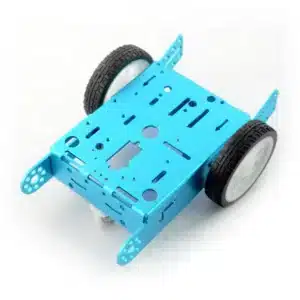
2WD Aluminum Alloy Smart Robotic Car Chassis
– Strong, rust-resistant aluminum alloy 2WD chassis for durability and light weight
– Includes 2 DC geared motors and solid rubber wheels for reliable motion
– Precision-cut frame with multiple mounting holes for sensors and controllers
– Compatible with Arduino, Raspberry Pi, ESP32, motor drivers and modules
– Easy to assemble — ideal for students, hobbyists, and developers building smart robots
– Perfect for line-following, obstacle avoidance, Bluetooth/Wi-Fi control, and AI projectsSKU: n/a -
Intermediate Electronics Kits
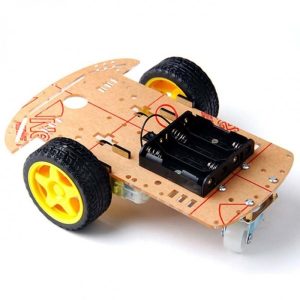
2WD Acrylic Robot Car Chassis
– Compact 2WD robot car chassis ideal for beginners and hobbyists
– Durable transparent acrylic base plate for secure mounting
– Includes two DC geared motors, two wheels and a caster wheel
– Universal compatibility with Arduino, Raspberry Pi and motor drivers
– Easy assembly with nuts, screws and motor mounts included
– Great starter platform for line following, obstacle avoidance and STEM projectsSKU: n/a -
Intermediate Electronics Kits
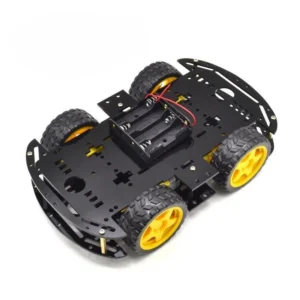
4WD Acrylic Robot Car Chassis
– High-torque 4WD robot car chassis built for rugged and indoor terrain
– Imported acrylic frame with metal supports for strength and low weight
– Four DC geared motors and rubber-tread multi-terrain wheels
– Universal board support: Arduino, Raspberry Pi, NodeMCU and more
– Spacious, optimized layout for sensors, batteries, drivers and AI modules
– Ideal for STEM education, AI rovers, autonomous navigation and hobby buildsSKU: n/a -
Intermediate Electronics Kits
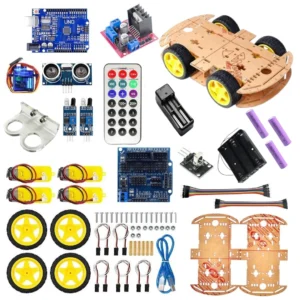
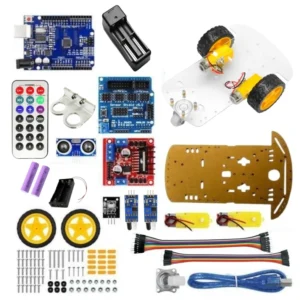
4WD Arduino Smart Robotic Car Kit (UnAssembled)
– 4-wheel drive metal chassis with four gear motors and rubber tires for strong traction
– Arduino UNO SMD board and Uno USB cable for easy programming
– L298N motor driver and motor shield compatibility for reliable motor control
– HC-SR04 ultrasonic sensor and 2 IR line-tracking sensors for obstacle avoidance and line following
– Includes batteries (3 x 18650), charger, IR remote, SG-90 servo, jumpers, and connectors
– Unassembled STEM kit ideal for hands-on learning, coding, and robotics customizationSKU: n/a -
Intermediate Electronics Kits
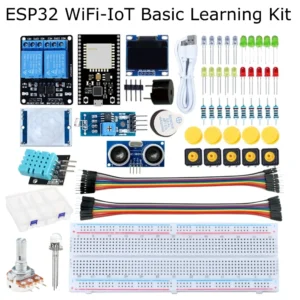
ESP32 IoT Based Basic Learning Kit with Component Box
- Beginner-friendly ESP32 IoT learning kit with Wi-Fi and Bluetooth enabled board.
- Includes sensors: DHT11, HC-SR04, HC-SR501 PIR, LDR module and more.
- Comes with OLED display, 2-channel relay, RGB LED, buzzer and potentiometer.
- Ready-to-use breadboard, jumpers, resistors and 5 large push buttons in an organized component box.
- No soldering required – breadboard-friendly parts for plug-and-play prototyping.
SKU: n/a -
Intermediate Electronics Kits
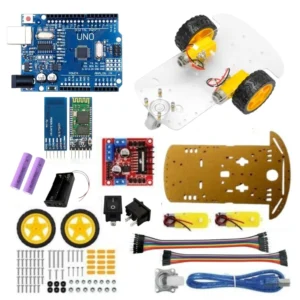
2WD Arduino Smart Robot Car Kit (Unassembled)
– Two-wheel drive (2WD) design for precise maneuverability and control
– Fully Arduino-compatible for easy programming and expansion
– Complete kit: chassis, geared DC motors, motor driver, sensors, and Arduino-compatible board
– Durable materials and versatile mounting holes for customization
– Easy assembly with step-by-step instructions and sample code included
– Battery holder, 18650 cells and charger included for portable powerSKU: n/a -
Intermediate Electronics Kits
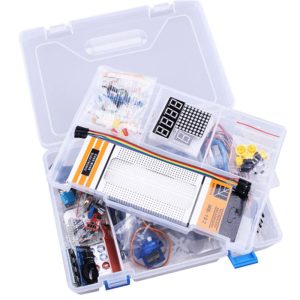
Arduino Upgraded Learning Kit With Component Box
– Complete Arduino UNO SMD board with ATmega328P microcontroller for reliable Arduino IDE compatibility.
– Large F240 component box with sensors, modules, motors and organized storage.
– High-quality MB102 breadboard, 80+ jumper wires, USB cable and multiple power options.
– Includes LCD, servo, stepper, relays, ultrasonic, DHT11 and input devices for diverse projects.
– Step-by-step manuals, example projects and community support for beginner-friendly learning.
– Ideal for education, DIY, prototyping, STEM lessons and makerspace workshops.SKU: n/a -
Intermediate Electronics Kits
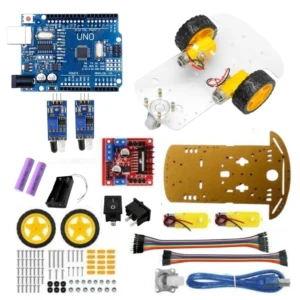
2WD Arduino Line Following Robot LFR (Unassembled)
– Arduino UNO based 2WD line following robot kit for hands-on learning
– Dual IR line tracking sensors for accurate contrast detection
– L298N motor driver controls two DC gear motors (3–12V)
– Unassembled DIY kit to practice wiring, soldering, and programming
– Durable acrylic chassis with high-traction rubber wheels and caster
– Expandable design: add Bluetooth, ultrasonic, or obstacle avoidance modulesSKU: n/a -
Intermediate Electronics Kits
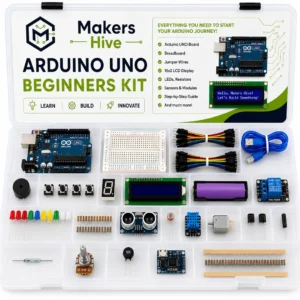
Arduino Beginner Kit With Component Box
– Complete beginner kit including Arduino UNO R3 and a full component box
– ATmega328P microcontroller for versatile project performance
– Breadboard, jumper wires, USB cable and power supply for quick prototyping
– Sensors and modules: temperature, light, motion, ultrasonic, buzzers, relays, and motors
– Interactive inputs: push buttons, toggles, potentiometer and 16×2 LCD
– Detailed tutorials, example projects and online resources for STEM learningSKU: n/a -
Intermediate Electronics Kits
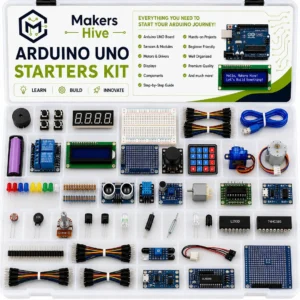
Arduino Starter Kit with Component Box
– All-in-one Arduino starter kit with organized component box for easy storage and fast project setup.
– Includes Arduino UNO SMD, breadboard, jumper wires, sensors, motors, display modules and more.
– Ideal for students, hobbyists and beginners learning electronics and programming.
– Safe low-voltage components perfect for school STEM, labs and home learning in Pakistan.
– High-quality, tested parts for reliable performance and long-term use.
– Ready for tutorials, classroom projects and DIY prototypes out of the box.SKU: n/a -
Intermediate Electronics Kits
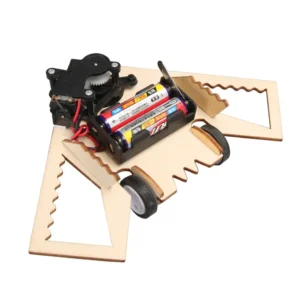
T-M410 Obstacle Avoidance Robot DIY Learning Kit
– Build and program your own obstacle avoidance robot using infrared or ultrasonic sensors
– Hands-on STEM kit combining mechanics, electronics, and coding
– Battery powered, low-voltage design ideal for students and beginners
– Durable wooden chassis with dual motor differential drive
– Includes motors, wheels, sensor, wiring, battery holder, and assembly accessories
– Assembly time 45-60 minutes; recommended skill level: IntermediateSKU: n/a -
Intermediate Electronics Kits
Arduino Upgraded Learning Kit With Component Box (Imported)
– Complete Arduino starter bundle with UNO board, breadboard, jumper wires and sensors
– Organized 39-part component box for easy access and storage
– Step-by-step, color-coded guides to learn circuits and Arduino C-style programming
– Build 15+ hands-on projects: temperature monitor, line follower, LED patterns and more
– Ideal for beginners, students, hobbyists and makers looking to learn by doing
– No prior experience required; plug, code, and see your projects come to lifeSKU: n/a -
Intermediate Electronics Kits
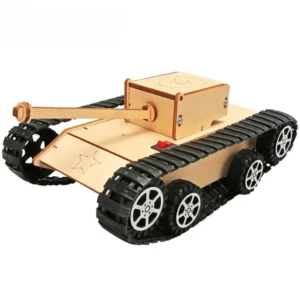
T-M211 Electric Tank Car DIY Learning Kit
– Build a fully functional electric tank car while learning motor and circuit basics
– Dual DC geared motors with dual-track drive for realistic movement
– Beginner-friendly assembly with clear wiring and simple components
– Durable plastic and metal parts for repeated classroom or home use
– Perfect for STEM lessons, robotics clubs, and science fair projects
– Customizable design lets learners modify and experimentSKU: n/a -
Intermediate Electronics Kits
2WD Arduino Bluetooth Controlled Robot (Unassembled)
– Beginner-friendly 2WD Arduino robotics kit with Bluetooth control
– Uses Arduino UNO, HC-05 Bluetooth module and L298N motor driver
– Smartphone control via Android or iOS apps
– Durable acrylic chassis with high-traction rubber wheels
– Expandable design supports ultrasonic, IR and other sensors
– Ideal for STEM education, hobby projects and Arduino learningSKU: n/a -
Intermediate Electronics Kits
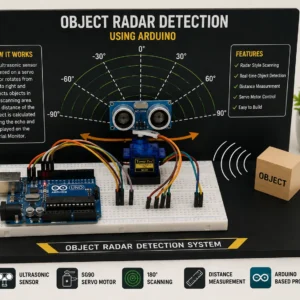
Smart Object Radar Detection System using Arduino (Unassembled)
- Arduino-based radar detection system with ultrasonic sensor and servo motor for real-time object scanning
- Rotating sensor head scans surroundings and measures distance to detected objects accurately
- Complete unassembled kit includes Arduino Uno, SG90 servo, ultrasonic sensor, breadboard, and jumper wires
- Perfect educational project for learning Arduino programming, robotics, and automation fundamentals
- Ideal for students, beginners, STEM education, science exhibitions, and DIY electronics enthusiasts
- Compact, portable design with beginner-friendly setup and reusable components
SKU: n/a
This is the step between simple science models and full robotics programming, and it is the level most students skip by mistake. Intermediate electronics kits introduce sensors, signals and circuits. A student stops merely assembling parts and starts understanding how a machine reads its environment and reacts to it.
The shift here is important. A beginner kit does the same thing every time you switch it on. An intermediate kit behaves differently depending on what is in front of it. Put a line on the floor and the car follows it. Put a wall in its path and the robot turns away. That is the first real taste of automation, and it is what makes the jump to Arduino make sense later instead of feeling like magic.
What is inside an intermediate kit
- Sensor driven robots. Line tracking robot cars that follow a drawn path, obstacle avoidance robots that detect and steer around objects, and creeping or walking robots driven by simple sensor logic.
- Smart robot cars. Ready to build 2WD smart car kits that move, sense and respond without needing code written from scratch.
- Robot chassis and platforms. Acrylic and aluminium chassis kits with motors and wheels, which serve as the base a student can extend later with a controller board.
- Arduino starter and beginner kits. A student’s first look at a microcontroller, with breadboards, jumper wires, LEDs and basic components for learning circuits before writing serious code.
- Measurement and environment kits. Weather station kits and similar builds that take a real world reading and turn it into a signal.
What a student actually learns
- How infrared, ultrasonic and light sensors detect something and send a signal
- Motor control and motor driver basics, including how a robot turns by driving wheels at different speeds
- Reading and following a wiring diagram, and building on a breadboard
- The relationship between input, decision and output, which is the foundation of all programming
- Troubleshooting, which is the skill that separates a student who quits from one who continues
Frequently asked questions
Does my child need to know how to code for these kits?
For most kits in this category, no. Line tracking cars, obstacle avoidance robots and smart 2WD cars work through their sensor and driver circuitry once assembled, so a student sees the robot behave intelligently without writing a single line of code. The Arduino starter kits in this category are the bridge, and they introduce coding gently rather than assuming it.
What is the difference between this level and the advanced Arduino kits?
At this level the behaviour is largely built in. At the advanced level the behaviour is written by the student. An intermediate line follower follows a line because of how it is wired. An advanced robot follows a line because someone programmed it to, and that same robot can be reprogrammed to do something completely different. If the student is not yet writing code, stay here.
Is soldering required?
Some kits at this level involve light soldering, particularly certain robot car kits, while many others are screw and plug assembly only. The requirement is stated on each product page, so check before you order if you would rather avoid it entirely.
Does a robot chassis kit come with everything needed to make it run?
A chassis kit is the mechanical base, meaning the frame, motors and wheels. It is designed to be built on. If you want a robot that works out of the box, choose one of the complete smart car or line tracking kits instead. If you want a platform the student will extend with their own controller and sensors, the chassis is the right choice.
Are these suitable for a school or college project?
Yes. Sensor based robots demonstrate a clear working principle and are reliable to show repeatedly, which makes them strong exhibition and assessment projects. They also give a student something real to explain, since they can point to the sensor and describe exactly what it is detecting.
My child finished a solar car kit easily. Is this the right next step?
Yes, this is exactly the intended progression. Move to a sensor based robot such as a line tracking car or an obstacle avoidance robot. It uses the assembly skills they already have while introducing something genuinely new.
Not sure this is the right level
If your child has not built anything before, start with Beginner STEM Kits. If they are already writing and uploading code, go straight to Advanced Robotics & Arduino Kits.