
Beginner STEM Kits
Showing 1–15 of 85 resultsSorted by popularity
-
Beginner STEM Kits
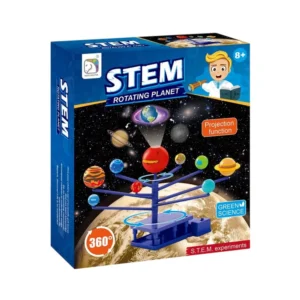
STEM Rotating Planet DIY Learning Kit
- Interactive STEM learning kit for hands-on astronomy education
- Build a functional rotating planet system that simulates real solar system motion
- DIY assembly develops problem-solving skills and mechanical understanding
- Perfect for science fair projects, classroom demonstrations, and STEM activities
- Safe, lightweight design suitable for students aged 8+ years
- Motorized operation makes learning engaging and visually appealing
SKU: n/a -
Beginner STEM Kits
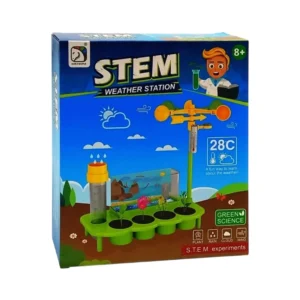
STEM Weather Station DIY Learning Kit
- Complete DIY weather station kit for hands-on STEM learning and weather monitoring
- Measures temperature, humidity, and optional air pressure with real-time display
- Build-it-yourself assembly promotes understanding of electronics and sensor integration
- Includes temperature sensor, humidity sensor, and LCD/LED display module
- Compatible with Arduino programming platforms for advanced learning opportunities
- Perfect for science fairs, classroom demonstrations, and STEM lab activities
- Safe, student-friendly design suitable for ages 8+ with no advanced tools required
SKU: n/a -
Beginner STEM Kits
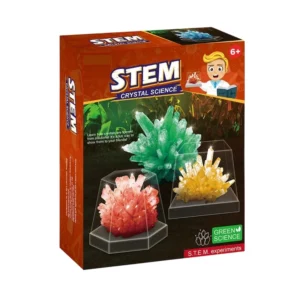
STEM Crystal Science DIY Learning Kit
– Hands-on STEM crystal growing experiments that teach chemistry and geology
– Grow real, display-ready crystals and observe formation over time
– Complete kit with crystal powder, seed crystals, containers, and mixing tools
– Step-by-step instructions suitable for beginners and students ages 8 and up
– Safe and student-friendly for classrooms, science fairs, and home use
– Ideal for school science projects, demonstrations, and STEM clubsSKU: n/a -
Beginner STEM Kits
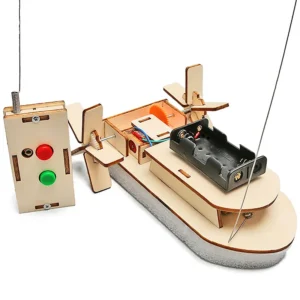
T-M318 Remote-Controlled Paddle Boat DIY Learning Kit
– Build a working remote-controlled paddle boat
– Teaches electronics, motor control, and buoyancy
– DC motor-driven paddle propulsion included
– Wireless remote-control module for direction and speed
– Easy hands-on assembly with no soldering required
– Durable, lightweight materials ideal for STEM learningSKU: n/a -
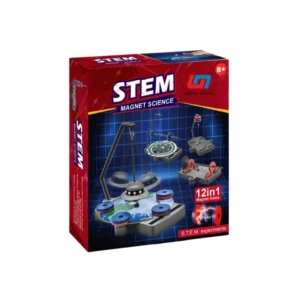
Beginner STEM Kits
STEM Magnet Science 12 in 1 DIY Learning Kit
– Build 12 hands-on magnetic experiments to explore attraction, repulsion, fields, and motion
– Learn core STEM concepts: magnetism, polarity, force, and simple motors
– Includes magnetic bars and discs, iron filings, compass, frames, rods, clips, screws, and instruction manual
– Clear step-by-step guide for beginners and classroom use
– Safe, non-toxic components and child-friendly design (keep small parts away from children under 3)
– Portable kit ideal for home learning, classrooms, after-school projects, and science fairsSKU: n/a -
Beginner STEM Kits
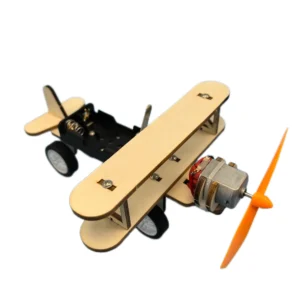
T-M420 Taxiing Aircraft DIY Learning Kit
- Hands-on DIY kit to build a motorized taxiing model aircraft
- STEM-focused lessons in aerodynamics, propulsion, motion, and energy conversion
- Complete hardware set: motor, propeller, wheels, wiring, switch, and tools
- Beginner-friendly assembly with step-by-step instructions; ages 10 and up
- Durable plastic and lightweight metal parts for repeated classroom use
- Great for science fairs, after-school clubs, and classroom demonstrations
SKU: n/a -
Beginner STEM Kits
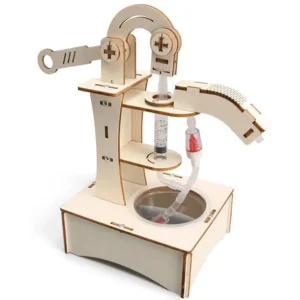
T-M74 Hand-Operated Water Pump DIY Learning Kit
– Educational DIY kit that demonstrates the working principle of a manual water pump
– Hands-on STEM learning tool for students, hobbyists, and beginners
– Easy to assemble with no soldering required
– Teaches mechanical motion, suction, and hydraulic pressure concepts
– Durable plastic and mechanical parts for repeated classroom use
– Recommended for ages 8 and above, great for science fairs and demonstrationsSKU: n/a -
Beginner STEM Kits
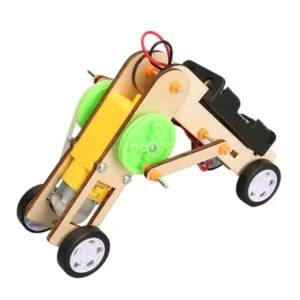
T-M105 Creeping Robot DIY Learning Kit
– Hands-on DIY kit to build a creeping/crawling robot
– Teaches mechanical linkages, gears, and motor control
– Motorized operation using a small DC motor and 2x AA batteries
– Intermediate skill level, ideal for classroom or club projects
– Includes parts, screws, battery holder, and step-by-step instructions
– Encourages creativity, problem solving, and STEM learningSKU: n/a -
Beginner STEM Kits
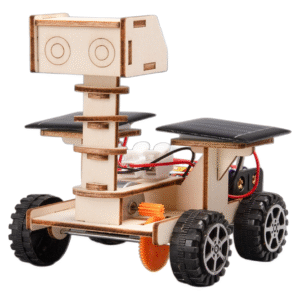
T-M10/T-M392 Solar Lunar Rover DIY Learning Kit
– Solar-powered lunar rover kit: runs on sunlight, no batteries required.
– DIY assembly designed for beginners and school students.
– Teaches solar energy, robotics, electrical circuits, and mechanical motion.
– Complete hardware set with motor, gearbox, solar panel, wheels, and tools.
– Ideal for classroom demos, science fairs, and hands-on STEM learning.
– Easy-to-follow instructions for a rewarding build and learning experience.SKU: n/a -
Beginner STEM Kits
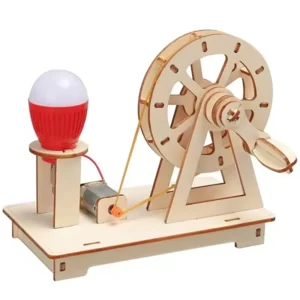
T-M304 Hand-Cranked Generator DIY Learning Kit
– Hands-on DIY generator kit to explore electromagnetic induction and energy conversion
– Manual hand-crank operation, no battery required
– Easy assembly with no soldering, ideal for beginners and students
– Durable, reusable educational model for repeated experiments
– Designed for STEM education, classroom demos, and science fairs
– Demonstrates how mechanical motion is transformed into electrical energySKU: n/a -
Beginner STEM Kits
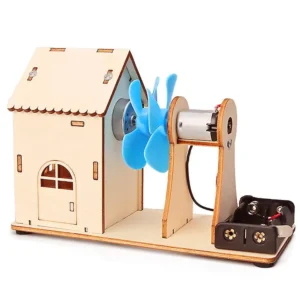
T-M234 Wind Power DIY Learning Kit
– Hands-on wind power DIY kit for beginners
– Build a working mini wind turbine and generator
– Teaches renewable energy, aerodynamics, and STEM concepts
– Easy assembly with pre-cut wooden parts and simple hardware
– Includes DC motor, LED indicator, blades, wires, and accessories
– Safe, durable materials ideal for classrooms, workshops, and fairsSKU: n/a -
Beginner STEM Kits
T-M199 Wind Turbine DIY Learning Kit
– Hands-on DIY wind turbine project that converts wind energy into low-voltage DC power.
– Ideal for STEM classes, science fairs, and practical classroom demonstrations.
– Easy, solder-free assembly with pre-cut parts; assembly time 30–40 minutes.
– Includes rotor blades, hub, DC motor/generator, LED indicator, wires, and base platform.
– Teaches aerodynamics, mechanical rotation, and energy conversion concepts.
– Durable, reusable materials built for repeated experiments and demonstrations.SKU: n/a -
Beginner STEM Kits
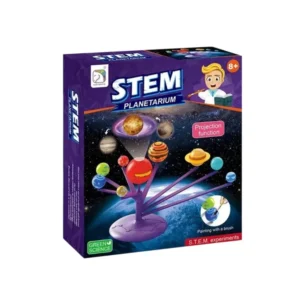
STEM Planetarium DIY Learning Kit
– Build-your-own miniature planetarium and solar system model
– Hands-on STEM learning that teaches astronomy, planetary motion, and physics
– Clear step-by-step guide for beginner to intermediate builders
– Durable, child-safe components with battery or USB power options
– Ideal for classrooms, homeschooling, science fairs, and STEM clubs
– Recommended for ages 6 and up; promotes problem-solving and spatial thinkingSKU: n/a -
Beginner STEM Kits
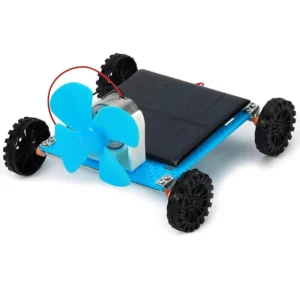
T-S39 Solar-Powered Wind-Powered Car DIY Learning Kit
– Dual-power design: run the car with solar energy or wind power.
– Hands-on STEM kit ideal for classrooms, science fairs, and hobbyists.
– Easy assembly with no soldering required; suitable for beginners.
– Teaches solar panels, motors, propellers, and energy conversion.
– Encourages critical thinking, creativity, and sustainable technology awareness.
– Compact educational model made of plastic and electronic components.SKU: n/a -
Beginner STEM Kits
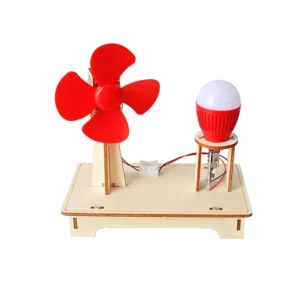
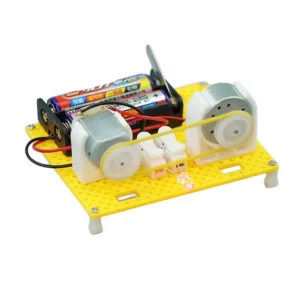
T-S23 Electric Motor Generator DIY Learning Kit
– Hands-on kit that demonstrates both electric motor and generator principles
– Ideal for STEM education, classroom demos, and science fairs
– Simple assembly with clear component layout; no soldering required
– Teaches electromagnetic induction, coils, magnets, and energy conversion
– Durable design for repeated classroom use and student experiments
– Encourages problem-solving, experimental skills, and critical thinkingSKU: n/a
Beginner STEM kits are the easiest way to get a young learner building with their hands for the first time. Every kit in this collection is a no-code, no-soldering project. Your child snaps the parts together, watches it move, and understands why it works. There is no software to install, no microcontroller to program, and nothing extra to buy.
These kits exist to answer a single question a child already has. Why does the car move when I put it in the sun. Why does the turbine spin faster when I blow harder. Why do these two magnets refuse to touch. A beginner kit turns that question into something they can hold.
What is inside a beginner STEM kit
Each kit is built around one clear scientific idea, with every component included in the box. The range covers four broad areas.
- Solar and renewable energy. Solar powered cars and lunar rovers, wind turbine models, wind powered cars, and hand crank generators that let a child produce electricity with their own hand.
- Mechanical and motion kits. Water pumps, paddle boats, taxiing aircraft models and gear driven builds that show how motion is transferred from one part to another.
- Space and astronomy. Planetarium models and rotating planet kits that make orbits and rotation visible instead of abstract.
- Science experiment sets. Magnet science kits with multiple experiments in one box, and crystal growing kits that show a real chemical process unfold over days.
Why start at this level
- No programming, no soldering and no prior electronics knowledge required
- Every part is in the box, so there is no hunting for components mid build
- Real concepts taught through building, including solar energy, gears, magnetism, buoyancy and simple circuits
- Short build times, so a child finishes and sees a working result in one sitting rather than losing interest halfway
- Safe, low voltage and built from child friendly materials
- Ideal for school science projects, exhibitions and holiday activities
Frequently asked questions
Does my child need any electronics or coding knowledge for these kits?
No. That is the whole point of this level. Nothing here needs a computer, a programming language or any prior experience. Every kit is assembled by hand and runs on a simple motor, a solar cell, a battery or pure mechanics. If your child has never built anything before, this is the correct place to start.
Are the parts already included or do I need to buy anything separately?
Every kit ships complete with the components required to finish the build. A few kits use standard batteries which are noted clearly on the individual product page, so check the product description before ordering if that matters to you.
Is soldering required?
No. Nothing in the beginner range needs a soldering iron. Parts snap, screw or clip together. Soldering only becomes relevant in some of our advanced kits.
How long does a typical kit take to build?
Most beginner kits are finished in one sitting, usually between thirty minutes and two hours depending on the model and how much help the child needs. Crystal growing kits are the exception, since the crystal itself forms over several days.
Can these be used for a school science exhibition?
Yes, and they are a popular choice for exactly that. Solar cars, wind turbines and hand crank generators demonstrate a clear principle and keep working reliably on the day, which matters when a project has to be shown repeatedly to judges and visitors.
How do I know when my child is ready to move up a level?
When they can assemble a kit without step by step help, and when they start asking how the thing could be made to react on its own rather than just run, they are ready for sensors. That is the intermediate level.
Ready for the next step
Once a student is comfortable assembling kits and understands how a simple circuit works, move up to our Intermediate STEM & Electronics Kits, where sensors and signals come into play and the build starts making decisions on its own.