
An Arduino car kit is a bundle with a chassis, motors, wheels, an Arduino board, a motor driver and sensors, and you assemble and program it yourself. For most students the 4WD Arduino Smart Robotic Car Kit at Rs. 6,500 is the best starting point because it includes batteries, a charger, a servo and an IR remote.
What is an Arduino car kit and what comes inside?
An Arduino car kit is a box of parts that becomes a small programmable vehicle. You build the chassis, wire the motors and sensors, then upload code from the Arduino IDE so the car moves on its own or by remote control.
A typical kit contains:
- Chassis – a metal or plastic platform that holds everything.
- Motors and wheels – usually geared DC motors, two or four of them.
- Motor driver – an L298N or similar module, because Arduino pins cannot drive motors directly.
- Controller board – an Arduino UNO or a compatible board.
- Sensors – ultrasonic for obstacle avoidance, IR for line tracking.
- Power – a battery holder or 18650 cells, and often a charger.
- Wires and hardware – jumpers, screws, spacers and connectors.
Kits are sold unassembled on purpose. The assembly is where the learning happens, and it is also what most university project reports expect you to show.
What should you check before buying an Arduino car kit?
Check four things: drive type, what is included in the box, whether the board is Arduino-compatible, and whether spare parts are easy to find locally.
- Drive type. 2WD kits turn faster and are lighter. 4WD kits climb small ramps and hold a line better on rough floors.
- Included items. A kit with batteries, a charger and a servo saves you a second shopping trip. Read the summary carefully, because some kits ship without cells.
- Board compatibility. An Arduino UNO or UNO-compatible board works with the standard Arduino IDE and the huge library ecosystem. That matters when you search for sample code.
- Expandability. Extra mounting holes let you add Bluetooth, a camera or more sensors later without drilling.
Budget matters too, but a slightly better kit usually costs less than buying missing parts separately later.
4WD Arduino Smart Robotic Car Kit (UnAssembled)
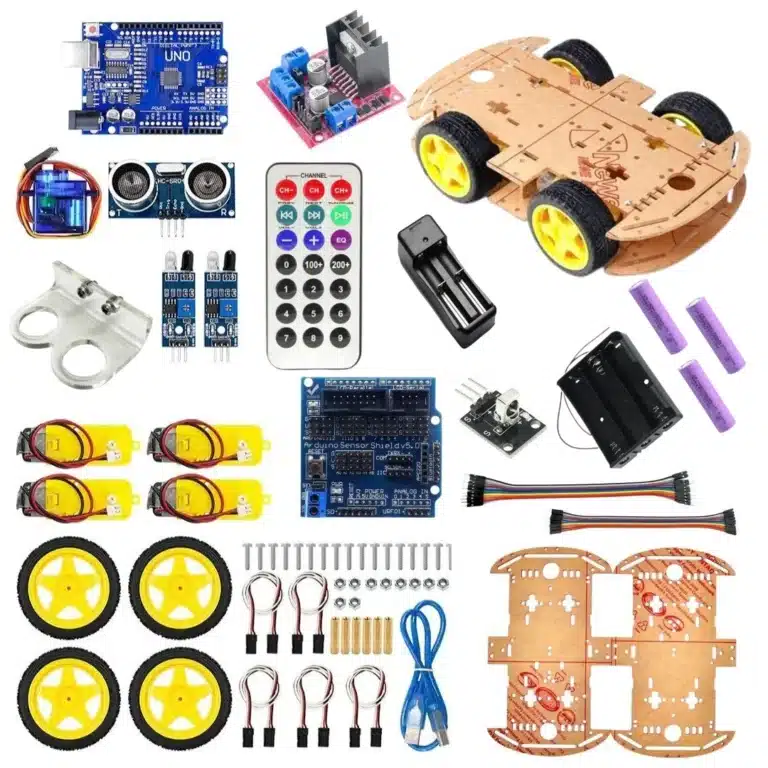
The 4WD Arduino Smart Robotic Car Kit (UnAssembled) is the most complete Arduino car kit in this list at Rs. 6,500, and it is the one I would recommend to most students. It has a metal 4-wheel drive chassis with four gear motors and rubber tires, so traction is good on tiles, concrete and slightly uneven floors.
Inside the box you get an Arduino UNO SMD board with a USB cable, an L298N motor driver with motor shield compatibility, an HC-SR04 ultrasonic sensor for obstacle avoidance, two IR line-tracking sensors, an SG-90 servo, jumper wires and connectors. Batteries are included as well: 3 x 18650 cells plus a charger, and an IR remote for manual driving.
That combination covers the three classic projects in one purchase: obstacle avoiding, line following, and remote-controlled driving. The servo also lets you mount the ultrasonic sensor on a sweeping head, which is a common final year demonstration.
2WD Arduino Smart Robot Car Kit (Unassembled)
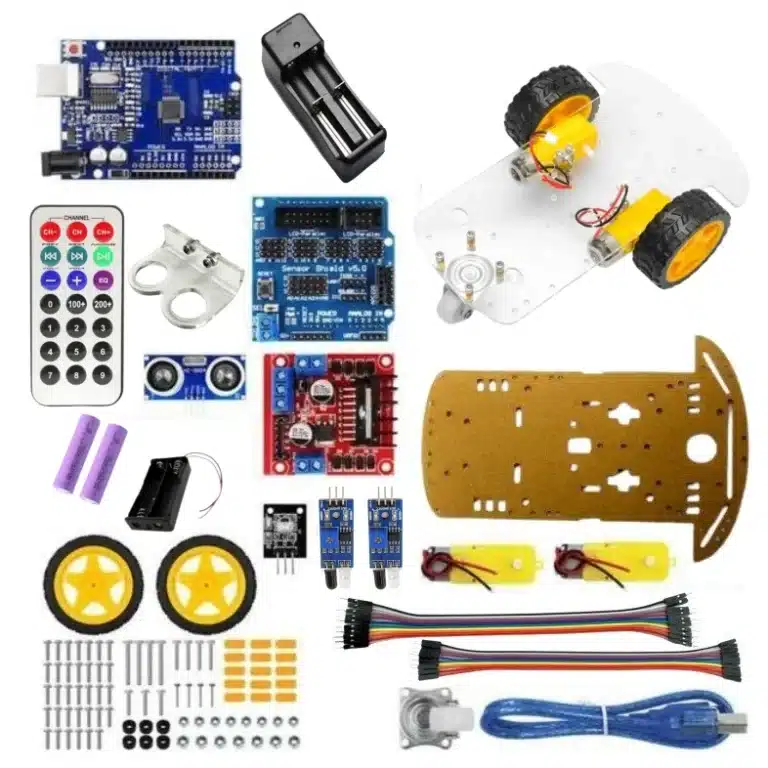
The 2WD Arduino Smart Robot Car Kit (Unassembled) at Rs. 4,500 is the lighter, cheaper option. Two geared DC motors drive it, so it turns sharply and is easier to carry to class.
It includes a chassis, geared motors, a motor driver, an Arduino-compatible board with a sensor shield, an HC-SR04 ultrasonic sensor, IR line-tracking sensors, an IR remote kit, a battery holder, 18650 cells and a charger. Mounting holes and slots make it easy to add a camera or extra modules later.
Choose this one if your project is line following or simple obstacle avoidance on a smooth floor, or if you want to spend less and keep the build short. The trade-off is less grip and less torque than a 4WD setup.
Smart Intelligent DIY Line Tracking Robot Car Kit (Unassembled)
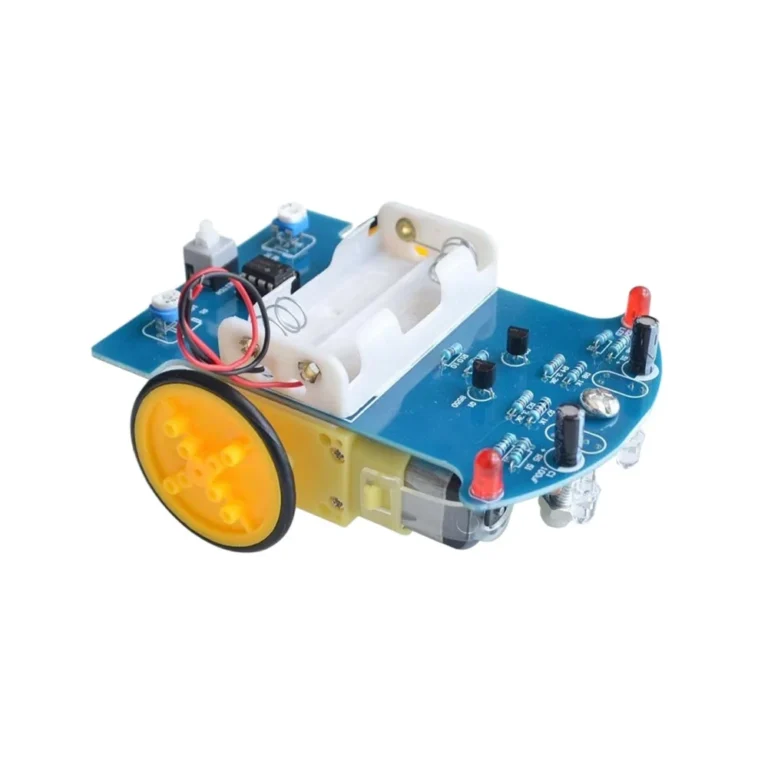
The Smart Intelligent DIY Line Tracking Robot Car Kit (Unassembled) costs Rs. 1,800 and does one job well: following a black or white line using two IR sensors.
It is a 2WD kit with an Arduino-compatible control system and an L298N or L293D motor driver. The chassis, DC motors and sensors are included, and the platform is expandable with Bluetooth or an ultrasonic module if you want to grow the project.
This is the kit for a school science exhibition, a first robotics club build, or a low-budget demo where the goal is to show sensor feedback and motor control. It does not include the extras that the bigger kits do, so plan for batteries separately.
Arduino starter and learning kits that support car projects
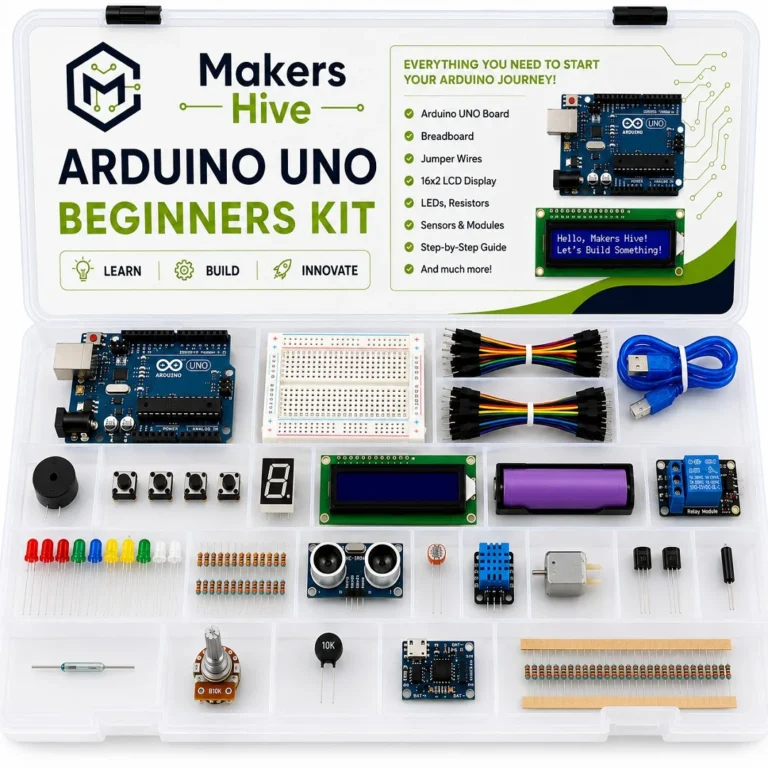
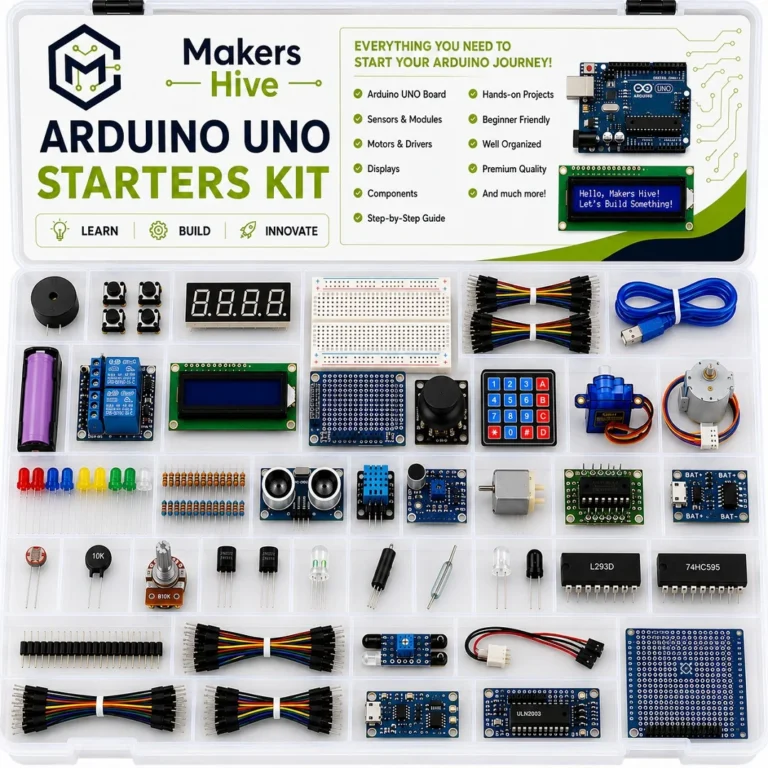
If you want one box that teaches electronics first and cars second, a general Arduino learning kit is a smarter buy than a car kit alone.
| Kit | Price | Best for |
|---|---|---|
| Arduino Beginner Kit With Component Box | Rs. 3,400 | Absolute beginners learning circuits, sensors and the IDE |
| Arduino Starter Kit with Component Box | Rs. 4,750 | Students who want an organized box with motors and displays |
| Arduino Upgraded Learning Kit With Component Box | Rs. 6,400 | Wider component range: LCD, servo, stepper, relays, DHT11 |
| Arduino Upgraded Learning Kit With Component Box (Imported) | Rs. 6,900 | Guided, color-coded project books and a 39-part box |
The beginner kit includes an Arduino UNO R3, a breadboard, jumper wires, a USB cable, a power supply, temperature, light, motion and ultrasonic sensors, buzzers, relays, motors, push buttons, a potentiometer and a 16×2 LCD. The starter and upgraded kits add more modules and storage. Any of them pairs well with a car chassis if you prefer to build the vehicle yourself later.
Can you build an Arduino car without a full kit?
Yes, but only if you already have the board, driver, motors and a way to charge batteries. Buying separately usually costs more and takes longer.
For a first build, a kit wins because the parts are matched: the motor driver suits the motors, the chassis holes line up, and the sample code matches the wiring. If you already own an Arduino UNO and a breadboard, adding a chassis, motors and a driver is reasonable. Otherwise start with a kit and reuse the parts for your next project.
Which one should you pick?
Pick the 4WD Arduino Smart Robotic Car Kit at Rs. 6,500 if you want one purchase that covers obstacle avoidance, line following and remote control, and you want batteries and a charger in the box. Pick the 2WD kit at Rs. 4,500 if you want a lighter, cheaper car for smooth floors. Pick the line tracking kit at Rs. 1,800 for a single, focused school demo. If you are completely new to electronics, buy an Arduino learning kit first and add a car chassis after you are comfortable with wiring and code.
All of these sit in the Intermediate Electronics Kits range, and College Road Electronics delivers across Pakistan with flat-rate shipping of Rs. 350. If you want to see the build steps before ordering, read the guide on how to build your first Arduino robot car.
Products in this guide
 4WD Arduino Smart Robotic Car Kit (UnAssembled)
- 2WD Arduino Smart Robot Car Kit (Unassembled)
 Arduino Upgraded Learning Kit With Component Box
- Arduino Starter Kit with Component Box
- Arduino Beginner Kit With Component Box
- Arduino Upgraded Learning Kit With Component Box (Imported)
- Smart Intelligent DIY Line Tracking Robot Car Kit (Unassembled)


Frequently asked questions
What is the difference between a 2WD and a 4WD Arduino car kit?
A 2WD kit drives two wheels and turns more sharply, so it is lighter and cheaper. A 4WD kit powers all four wheels, giving better traction and torque on rough or slightly uneven floors. For line following on a smooth surface, 2WD is enough. For ramps, carpet or heavier payloads, choose 4WD.
Do I need to know programming before buying an Arduino car kit?
No. Most kits ship with sample code and wiring instructions, and the Arduino IDE is free. You start by uploading a ready-made sketch, then change one value at a time, such as motor speed or sensor distance. Basic C-style syntax helps, but you learn most of it while building.
What power source does an Arduino car kit use?
Most kits run on 18650 lithium cells or a battery holder with AA cells, feeding the motor driver and the Arduino board. The 4WD and 2WD kits listed here include 18650 cells and a charger. Always match the battery voltage to what the motor driver and board accept, and never power motors from the Arduino 5V pin.
Can I add Bluetooth or a camera to these car kits?
Yes, if the chassis has spare mounting holes and the board has free pins. Bluetooth modules and cameras are common additions, and the 2WD kit in particular is described as expandable with extra modules. Plan your pin usage early so sensors, the motor driver and any wireless module do not conflict.
How long does assembly take for a beginner?
Most beginners finish a 2WD or 4WD car in a single afternoon, then spend more time on wiring checks and code. The line tracking kit is faster because it has fewer parts. Work slowly, test the motors before mounting the wheels, and keep the battery disconnected while you wire.
Where can students in Pakistan buy an Arduino car kit?
College Road Electronics on College Road, Rawalpindi stocks these kits and delivers nationwide with flat-rate shipping of Rs. 350. Students can also get guidance on parts for school, college and university projects.
