

ESP32 38-Pin Expansion Board Terminal Adapter Overview
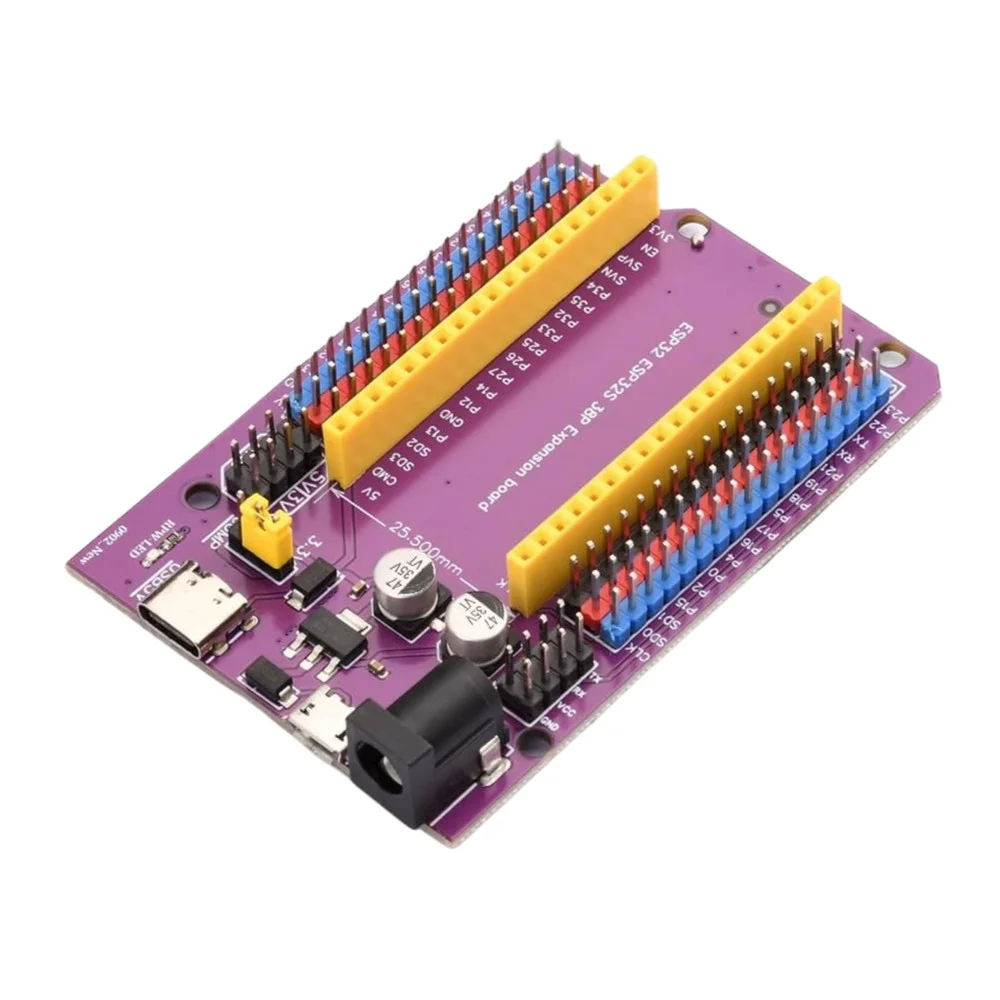
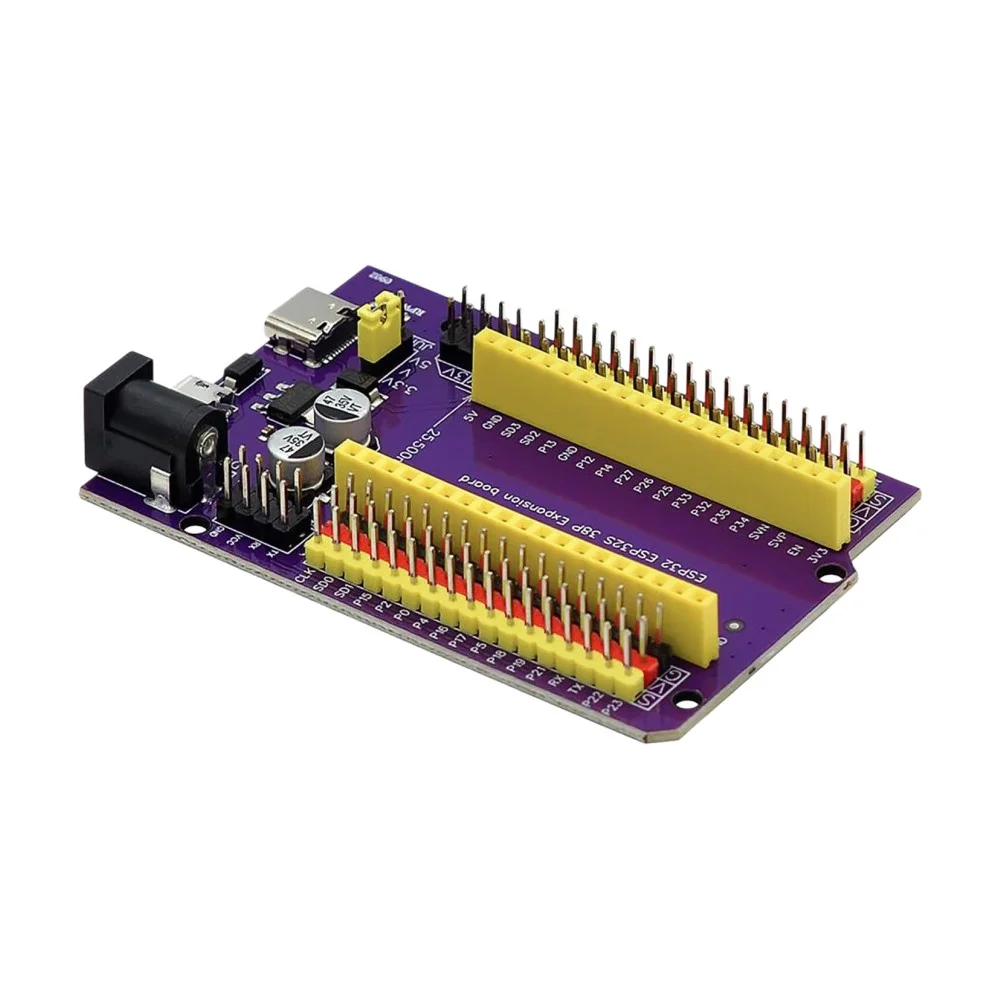
The ESP32 38-Pin Expansion Board Terminal Adapter is a practical development accessory designed to simplify wiring and prototyping with ESP32 DevKit (38-pin) boards. It converts the compact GPIO pins of the ESP32 into easy-to-use screw terminals and headers, making connections more secure, organized, and beginner-friendly.
This module is especially useful when working with multiple sensors, actuators, or external devices where stable and clean wiring is required.
Key Features of ESP32 Expansion Board
- Designed for ESP32 38-Pin Boards: Fully compatible with ESP32 DevKitC / NodeMCU-32S
- Full GPIO Breakout: All pins are clearly labeled and accessible
- Screw Terminal Connections: Secure wiring without soldering
- Dual Interface Access: Combines female headers + screw terminals
- Stable and Organized Layout: Reduces wiring complexity and errors
- Plug-and-Play Design: Simply insert ESP32 module – no extra setup required
- Multiple Power Points: Provides 3.3V, 5V, and GND distribution
Technical Specifications
- Compatible Board: ESP32 38-Pin (ESP-WROOM-32 based modules)
- Pin Count: 38 GPIO pins (fully broken out)
- Connector Type: Screw terminals + female headers
- PCB Material: FR-4 double-layer board
- Dimensions: Approx. 70-80 x 60-65 mm
- Pitch: Standard 2.54mm
- Power Supply: Uses power from ESP32 board
- Mounting: Breadboard / standalone use
How the ESP32 Terminal Adapter Works
The adapter acts as a GPIO breakout interface:
- ESP32 is mounted onto the board
- Each pin is routed to labeled terminals
- Users can connect wires directly via screws or jumper wires
This eliminates the need for complex breadboard wiring and improves reliability.
Pin and Interface Details
- Female Header Socket – Insert ESP32 module
- Screw Terminals – Connect sensors, relays, motors, etc.
- Power Lines – Multiple VCC (3.3V/5V) and GND terminals
Applications and Use Cases
- IoT and smart home projects
- Robotics and automation systems
- Sensor interfacing (temperature, gas, motion, etc.)
- Industrial prototyping setups
- Educational electronics labs
Advantages of Using ESP32 Expansion Board
- No soldering required – fast prototyping
- Strong and vibration-resistant connections
- Clear pin labeling reduces wiring errors
- Ideal for permanent or semi-permanent setups
Usage Tips and Best Practices
- Ensure your ESP32 is 38-pin version (not 30-pin)
- Always check pin alignment before inserting
- Use proper power supply (5V USB or regulated input)
- Avoid using restricted GPIO pins (used internally by ESP32)
- Do not power ESP32 from multiple sources simultaneously
Note: Images are for Illustration Purposes Only.



Reviews
There are no reviews yet