
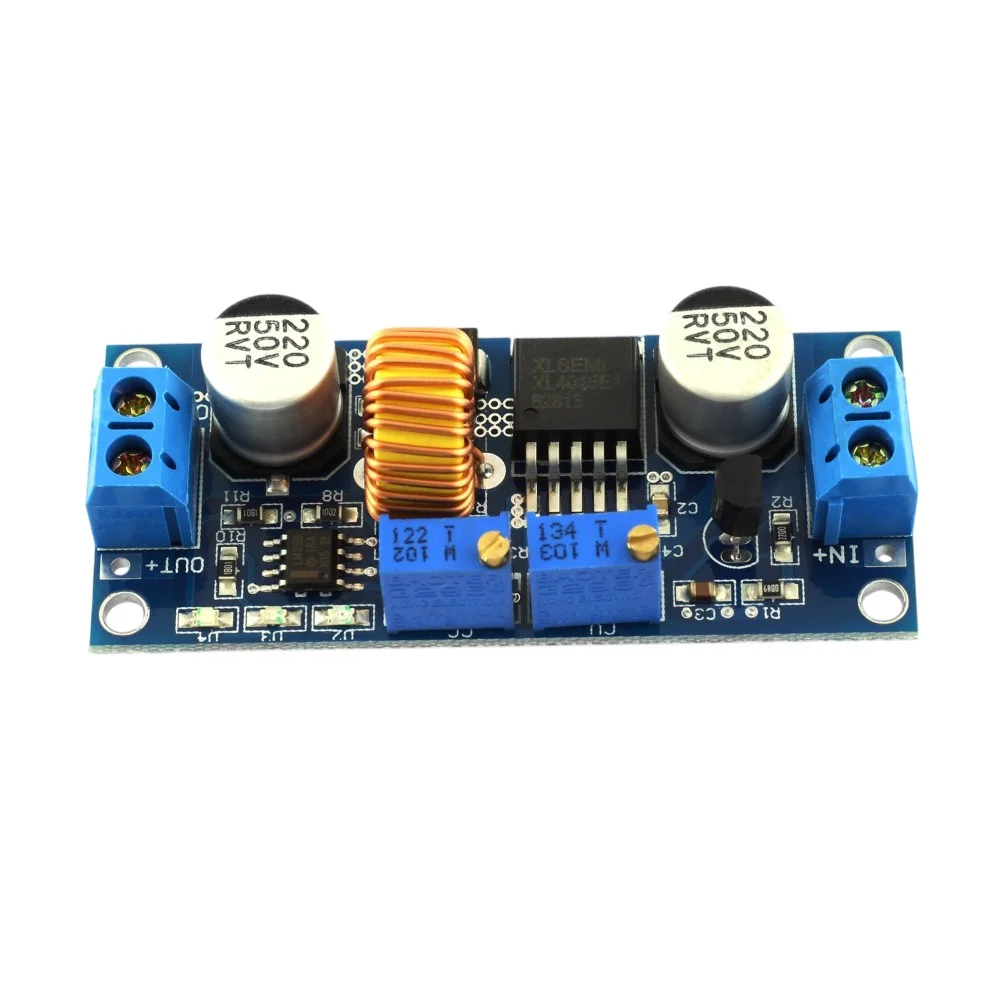
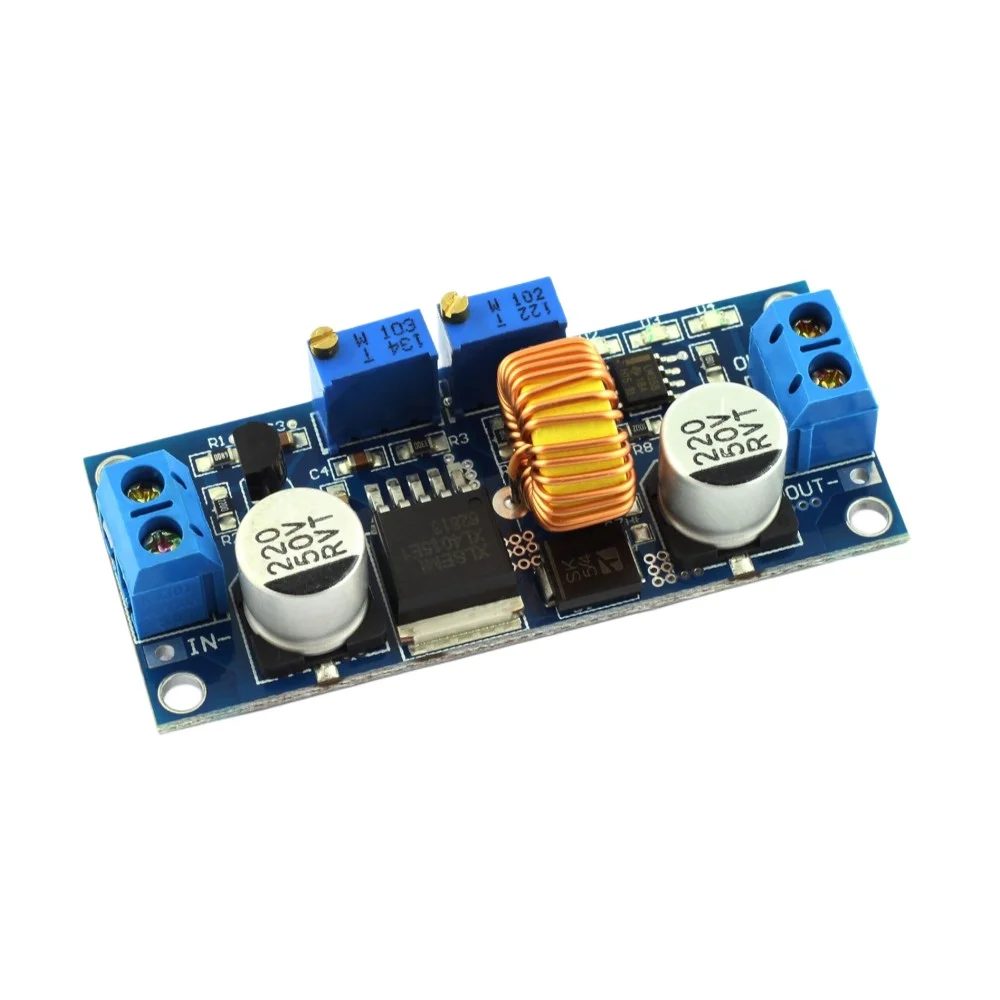

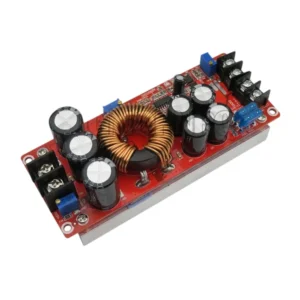
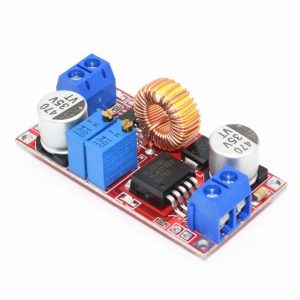
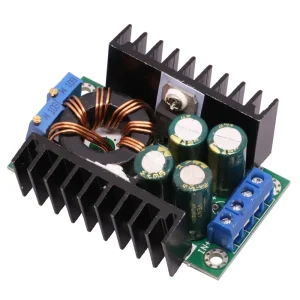
The DC-DC Step-Down Constant Current Regulator Module is a versatile buck converter designed to provide both constant voltage (CV) and constant current (CC) output. It efficiently converts a higher DC input voltage (4-38V) into a stable, adjustable lower voltage (1.25-36V) while also limiting current, making it ideal for LED driving, battery charging, and power regulation applications.
This module is widely used where precise current control is critical, such as in LED systems and charging circuits. The combination of voltage and current regulation in a single compact module makes it an essential component for DIY electronics enthusiasts and professional applications alike.
Key Features and Benefits
- Wide Input Voltage: 4V to 38V DC
- Adjustable Output Voltage: 1.25V to 36V DC
- Constant Current and Constant Voltage Modes (CC/CV)
- High Efficiency: Up to 90-95%
- Dual Potentiometers: Independent adjustment for voltage and current
- Stable Output Regulation: Protects sensitive loads
- Compact Design: Easy to integrate into projects
- LED Indicators (in some variants): Shows charging/current status
Technical Specifications
- Module Type: DC-DC Buck Converter (Step-Down)
- Input Voltage: 4V – 38V DC
- Output Voltage: 1.25V – 36V DC (adjustable)
- Output Current:
- Max: ~5A (with proper cooling)
- Recommended: 2-3A continuous
- Power Output: Up to ~75W
- Conversion Efficiency: Up to 95%
- Control Method: PWM-based switching regulator
- Cooling: Passive (heatsink recommended for high current)
- Protection: Overcurrent and thermal protection (model dependent)
How the DC-DC Step Down Regulator Works
This module operates using a buck (step-down) switching regulator with CC/CV control:
- The circuit adjusts output using PWM (Pulse Width Modulation)
- Voltage is regulated to a set level (CV mode)
- Current is limited to a preset value (CC mode)
- When load tries to draw more current, the module switches to constant current mode
This ensures safe and stable operation, especially for sensitive components. The dual-mode operation automatically transitions between constant voltage and constant current based on load requirements, providing optimal protection and performance.
Applications and Use Cases
- LED drivers (high-power LEDs)
- Battery charging (Li-ion, LiPo, lead-acid)
- Power supply regulation
- DIY electronics projects
- Solar charging systems
- Current-limited power sources
Advantages of Constant Current Regulation
- Combines voltage and current regulation
- High efficiency with low heat generation
- Protects loads from overcurrent
- Flexible and adjustable output
- Compact and easy to use
Usage Tips and Best Practices
- Always set voltage and current limits before connecting load
- Use a multimeter to adjust accurately
- Add a heatsink or fan for high current usage
- Ensure input voltage is higher than output
- Use proper wiring for current handling
Typical Use Case Example
Li-ion Battery Charging Setup
- Input: 12V supply
- Output: 4.2V (for Li-ion charging)
- Current Limit: 1A
- Result: Safe and controlled battery charging setup
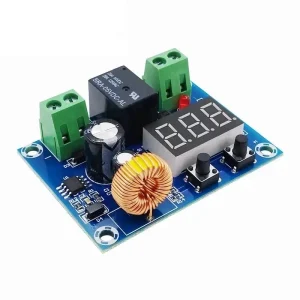
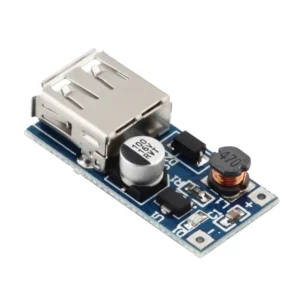
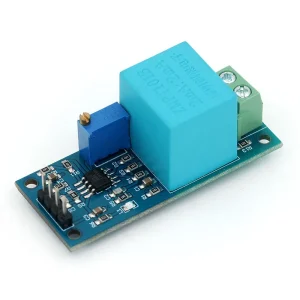
Note: Images are for Illustration Purposes Only.




Reviews
There are no reviews yet