
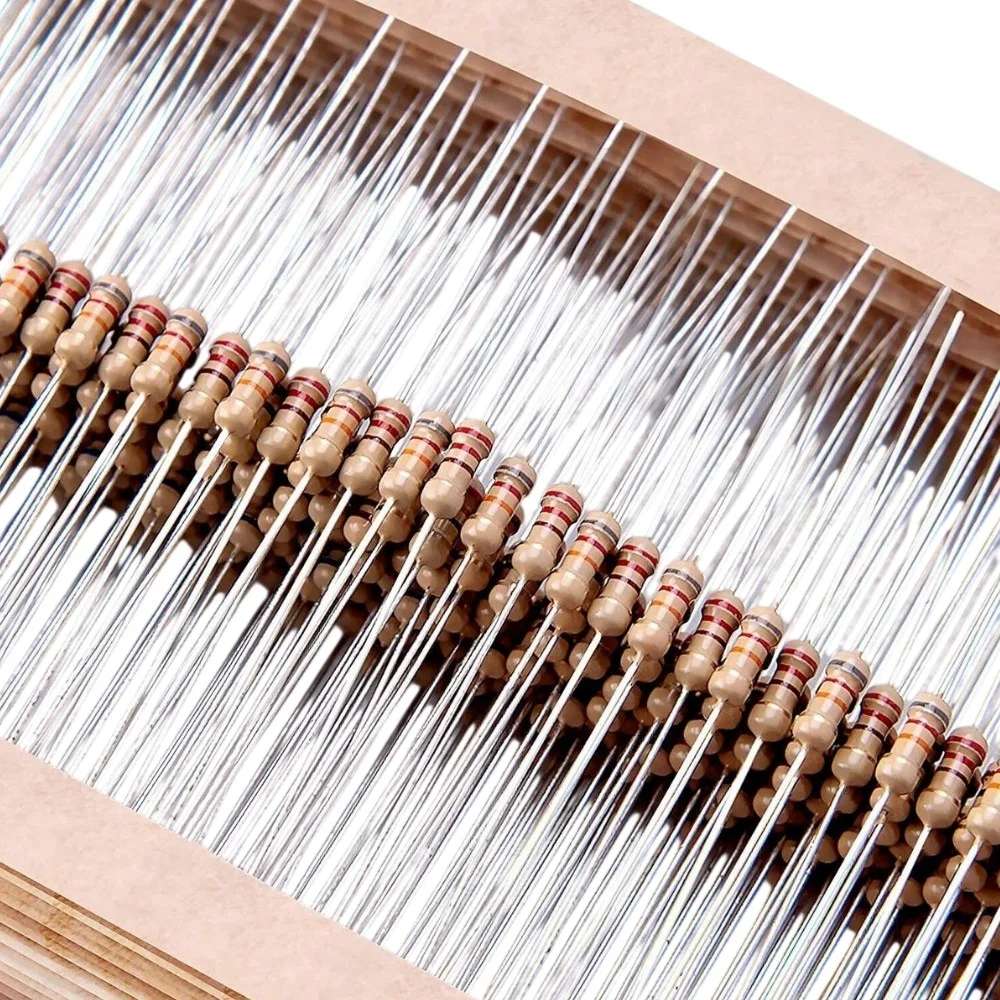

The Metal Film Resistors (1kΩ to 10MΩ) (1/4 Watt) are high-precision fixed resistors designed for a wide range of electronic and electrical applications. Manufactured using a thin metal film deposited on a ceramic substrate, these resistors offer excellent accuracy, low noise, high stability, and superior temperature performance compared to standard carbon film resistors.
Available in resistance values ranging from 1kΩ to 10MΩ, these 0.25W (1/4 Watt) resistors are ideal for current limiting, voltage division, pull-up/pull-down circuits, signal conditioning, timing circuits, and general-purpose electronic designs. They are widely used in Arduino projects, Raspberry Pi applications, robotics, power supplies, amplifiers, communication equipment, and educational electronics.
The through-hole radial lead design makes them easy to install on PCBs, breadboards, and prototype circuits.
Key Features of Metal Film Resistors
- High-Quality Metal Film Resistors
- Resistance Range: 1kΩ to 10MΩ
- Power Rating: 1/4 Watt (0.25W)
- High Precision and Stability
- Low Electrical Noise
- Excellent Temperature Stability
- Through-Hole Radial Lead Design
- Suitable for Breadboards and PCBs
- Long Operational Life
- Ideal for Professional and DIY Electronics
Technical Specifications
- Product Type: Fixed Metal Film Resistor
- Resistance Range: 1kΩ to 10MΩ
- Power Rating: 0.25W (1/4 Watt)
- Resistor Type: Metal Film
- Tolerance: Typically ±1% (may vary by manufacturer)
- Temperature Coefficient: Low (varies by model)
- Mounting Type: Through-Hole
- Lead Type: Axial Leads
- Body Material: Flame-Retardant Epoxy Coating
- Operating Temperature: Typically -55°C to +155°C
- RoHS Compliant: Yes (varies by manufacturer)
How Metal Film Resistors Work
A metal film resistor limits the flow of electrical current by providing a precise resistance value. The thin metal film deposited on a ceramic core determines the resistance, while laser trimming during manufacturing ensures accurate resistance values.
When current passes through the resistor, electrical energy is partially converted into heat, helping regulate voltage, limit current, divide signals, and protect sensitive electronic components.
Applications
- Arduino Projects
- Raspberry Pi Projects
- ESP32 and ESP8266 Circuits
- Voltage Divider Networks
- Current Limiting Circuits
- Pull-Up and Pull-Down Resistors
- Sensor Interface Circuits
- Audio Amplifiers
- Power Supply Circuits
- Educational Electronics
- Robotics and Automation
- DIY Electronics Projects
Advantages
- High accuracy and precision
- Low electrical noise
- Excellent long-term stability
- Better temperature performance than carbon film resistors
- Reliable operation in precision circuits
- Easy PCB and breadboard installation
- Wide resistance value selection
- Suitable for professional and hobby applications
Usage Tips
- Select the correct resistance value according to your circuit requirements.
- Ensure the resistor’s power dissipation does not exceed 0.25W.
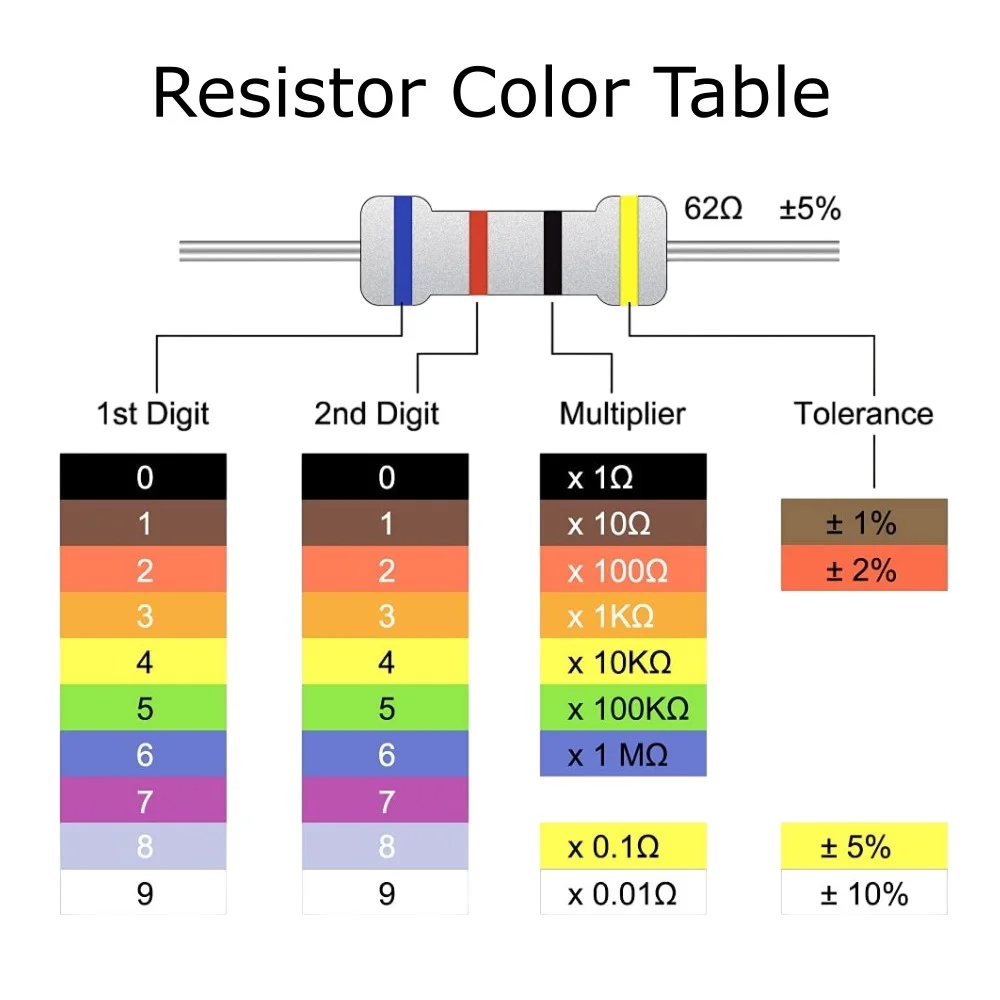
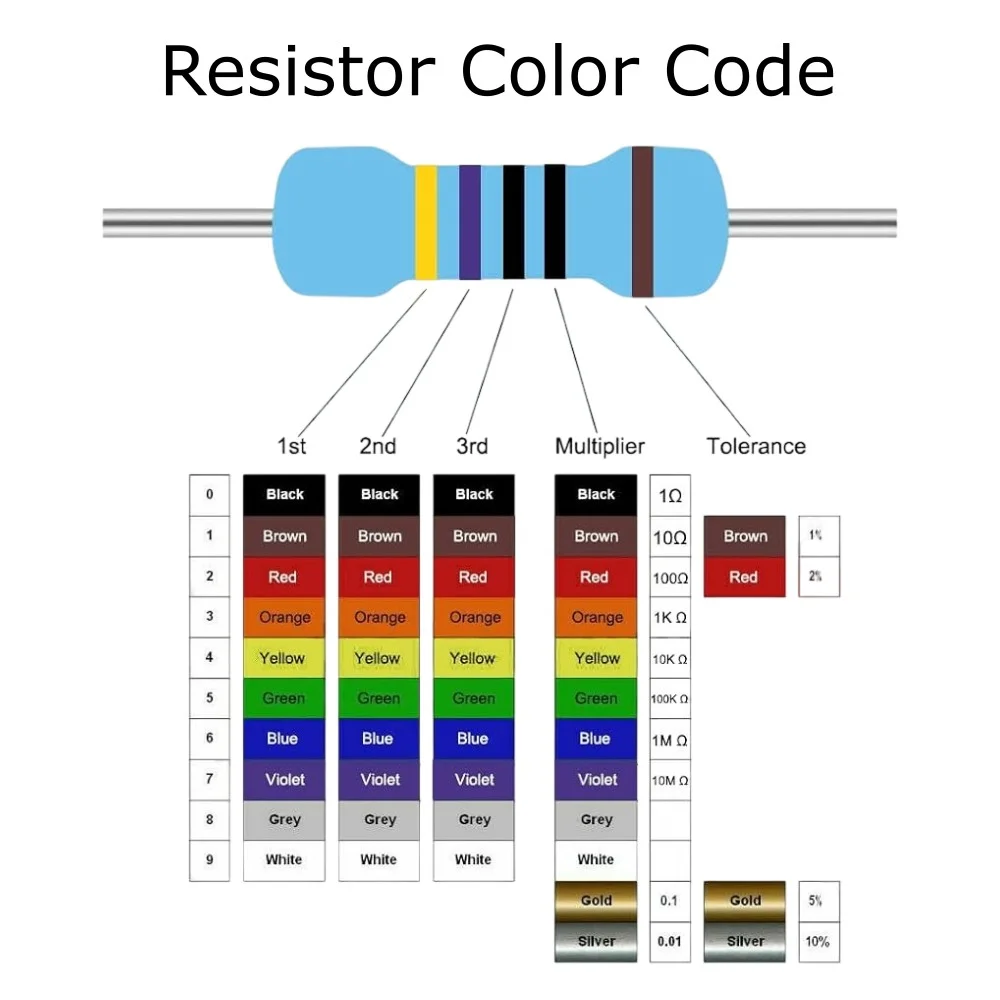
- Verify the resistor value using the color code or a multimeter before installation.
- Keep resistor leads as short as practical in high-frequency circuits.
- Avoid excessive heat during soldering to maintain accuracy.
- Store resistors in a dry, moisture-free environment.
Note: Images are for illustration purposes only.



Reviews
There are no reviews yet