

STM32F103C8T6 Blue Pill ARM Development Board Overview
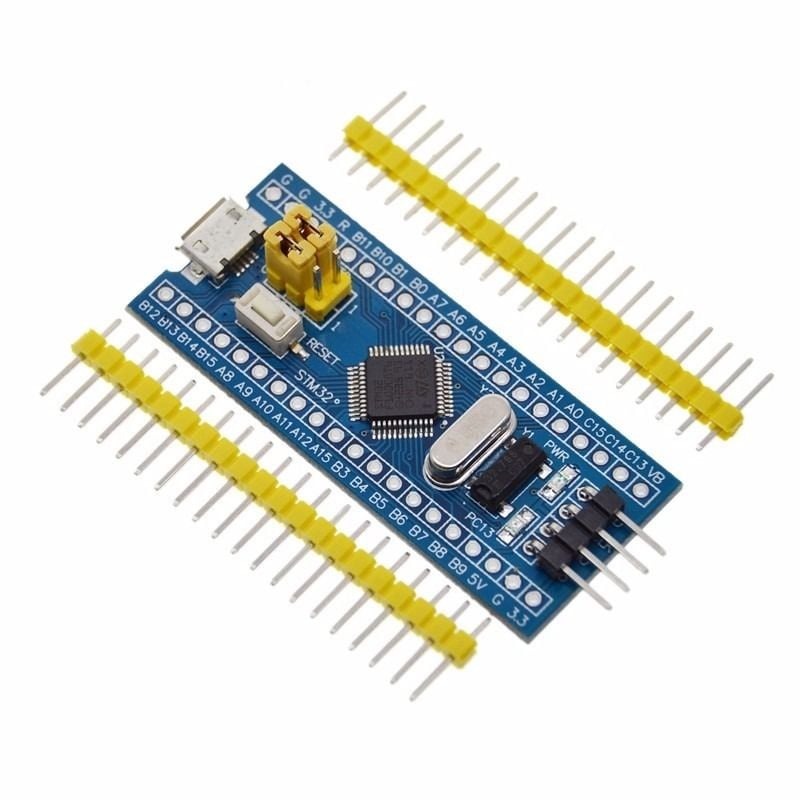
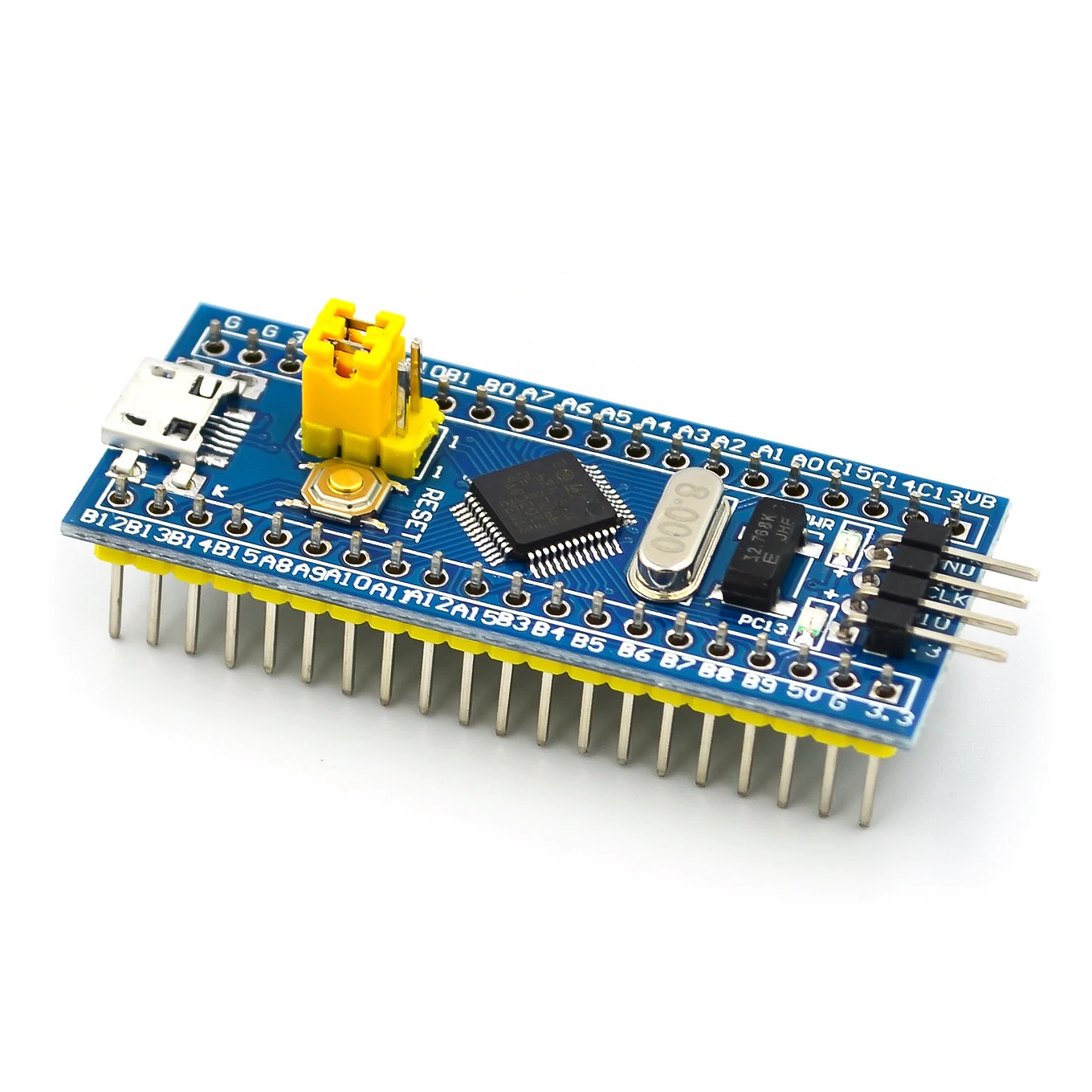
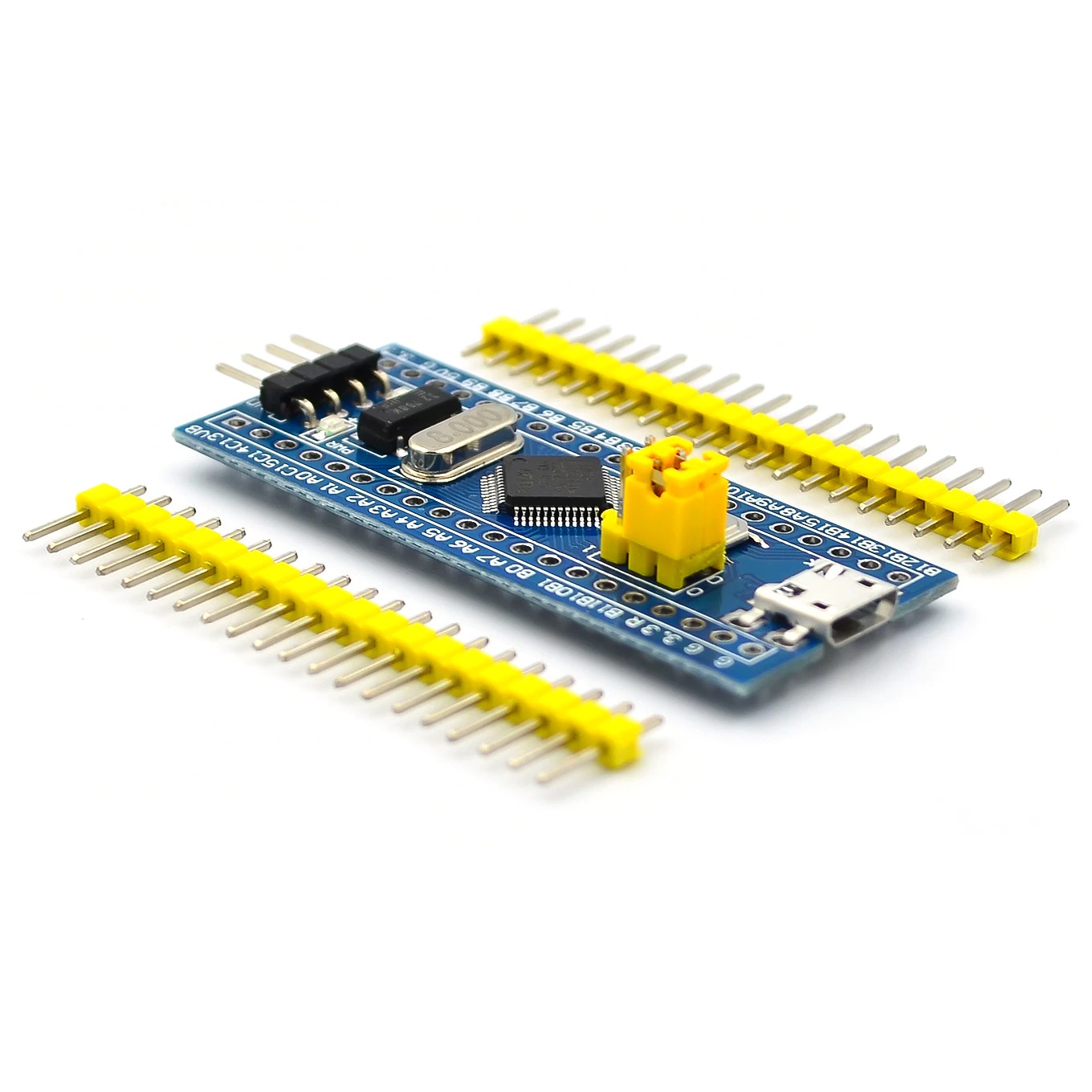
The STM32F103C8T6 Blue Pill is a compact, low-cost ARM development board built around the STMicroelectronics STM32F103C8T6 microcontroller. With a 72 MHz ARM Cortex-M3 core, 64 KB of Flash and 20 KB of SRAM, the Blue Pill provides significantly higher performance than many 8-bit boards while remaining affordable and easy to integrate into prototypes and final products.
Why Choose the Blue Pill (STM32F103C8T6)
- High performance 72 MHz Cortex-M3 CPU for real-time tasks and responsive control.
- Rich peripheral set including USB, CAN, multiple UARTs, SPI and I2C for flexible connectivity.
- Small footprint and standard pin headers make it ideal for breadboard prototyping and compact designs.
- Strong community support with examples for STM32CubeIDE, Arduino IDE (STM32 core), PlatformIO and Keil.
Key Specifications
- Microcontroller: STM32F103C8T6 (ARM Cortex-M3)
- Clock Speed: 72 MHz
- Flash Memory: 64 KB
- SRAM: 20 KB
- Operating Voltage: 3.3V (some pins 5V tolerant)
- GPIO Pins: 37 multifunction pins
- Analog: 10x 12-bit ADC channels
- Timers: 7 timers (16-bit and 32-bit)
- Communication Interfaces:
- 3x USART
- 3x SPI
- 2x I2C
- CAN bus support
- USB 2.0 Full Speed
- Debug: SWD (Serial Wire Debug) compatible with ST-Link
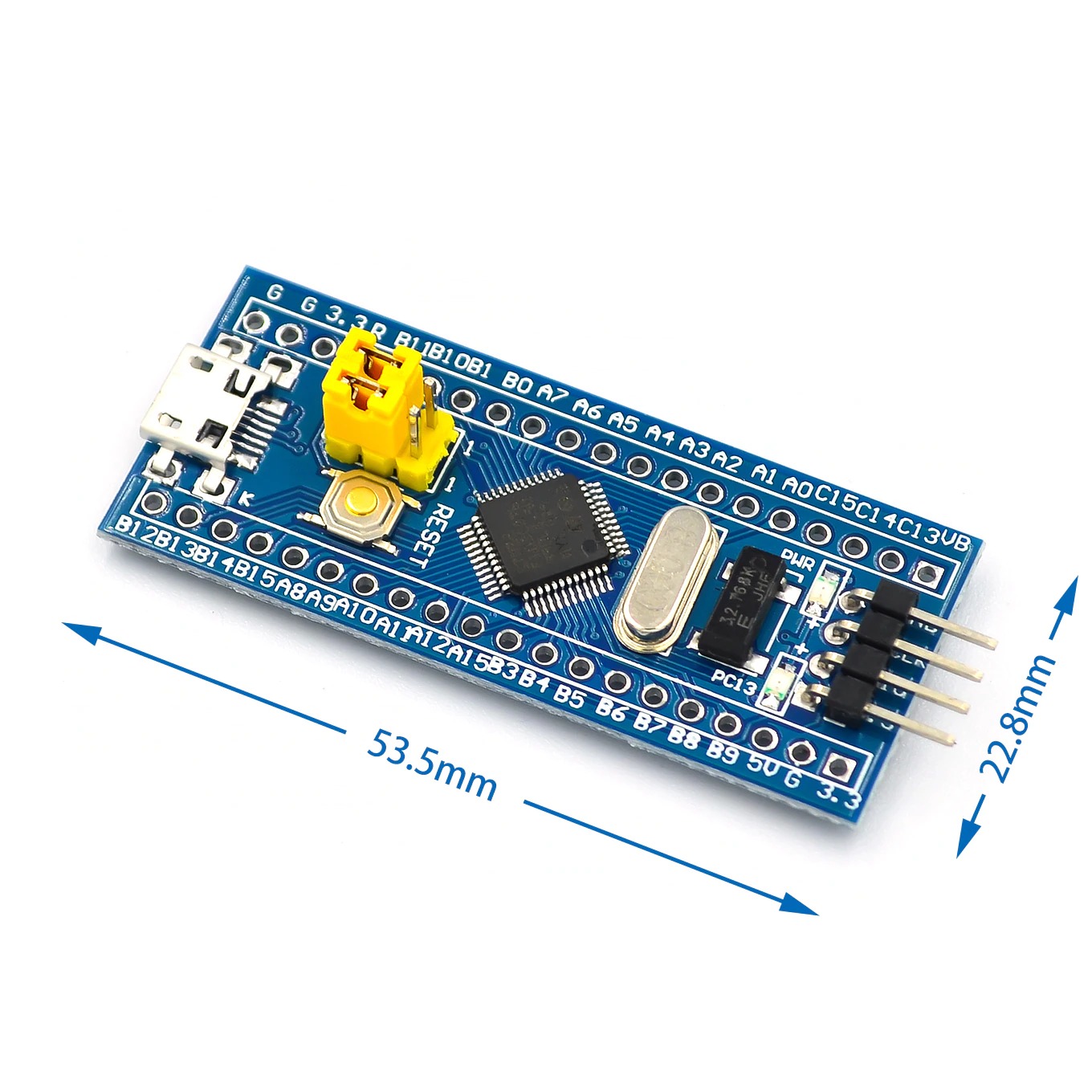
- Board Size: Approximately 53 mm x 22 mm
- Operating Temperature: -40°C to +85°C
Programming and Development Support
The Blue Pill is supported by a variety of toolchains and ecosystems, making it suitable for hobbyists, students and professional engineers:
- STM32CubeIDE: Official ST development environment with HAL libraries and CubeMX integration.
- Arduino IDE: Use the STM32 core to program the board with familiar Arduino-style code and libraries.
- PlatformIO: Modern development environment for VS Code and other editors with integrated build systems.
- Keil uVision: Commercial-grade IDE for performance-critical and industrial projects.
- Bootloading and flashing: Support for UART bootloader or direct programming with ST-Link via the SWD pins.
Power, Connectivity and I/O
- Power via Micro USB (5V input) or external 3.3V/5V supply on header pins.
- Multiple GPIOs for digital I/O, PWM outputs for motor control and LED dimming, and ADC channels for sensor input.
- Built-in USB connectivity for device projects and serial communication over USB.
Typical Applications
- IoT devices and sensor gateways
- Robotics and motor control systems
- Data loggers and monitoring systems
- Real-time embedded projects and industrial control
- Educational kits and prototyping for students and hobbyists
Getting Started Tips
- Install STM32CubeIDE or the STM32 Arduino core to begin programming quickly.
- Use an ST-Link probe for reliable flashing and debugging via the SWD interface.
- Check voltage levels: the board runs at 3.3V; some pins may be 5V tolerant but verify before connecting sensors or modules.
- Reference community pinout diagrams when wiring shields, sensors and displays to avoid miswiring.
Comparison: Blue Pill vs Typical 8-bit Boards
- Processing: 32-bit ARM Cortex-M3 at 72 MHz versus common 8-bit micros at 16 MHz.
- Memory: 64 KB Flash and 20 KB SRAM provide more room for complex applications and libraries.
- Peripherals: Native USB, CAN and multiple hardware serial ports expand connectivity options.
Recommended Accessories
- ST-Link V2 programmer/debugger for SWD flashing and debugging
- Micro USB cable for power and USB connectivity
- Female header pins or soldered headers for breadboard integration
- Level shifters if interfacing with 5V-only modules
Ordering and Notes
The STM32F103C8T6 Blue Pill is an economical, high-performance development platform suitable for rapid prototyping and deployment. Images are for illustration purposes only. Verify pinouts and board revisions when integrating into critical systems.




Ayaan Faisal (verified owner) –
Ayaan Faisal –