

Overview
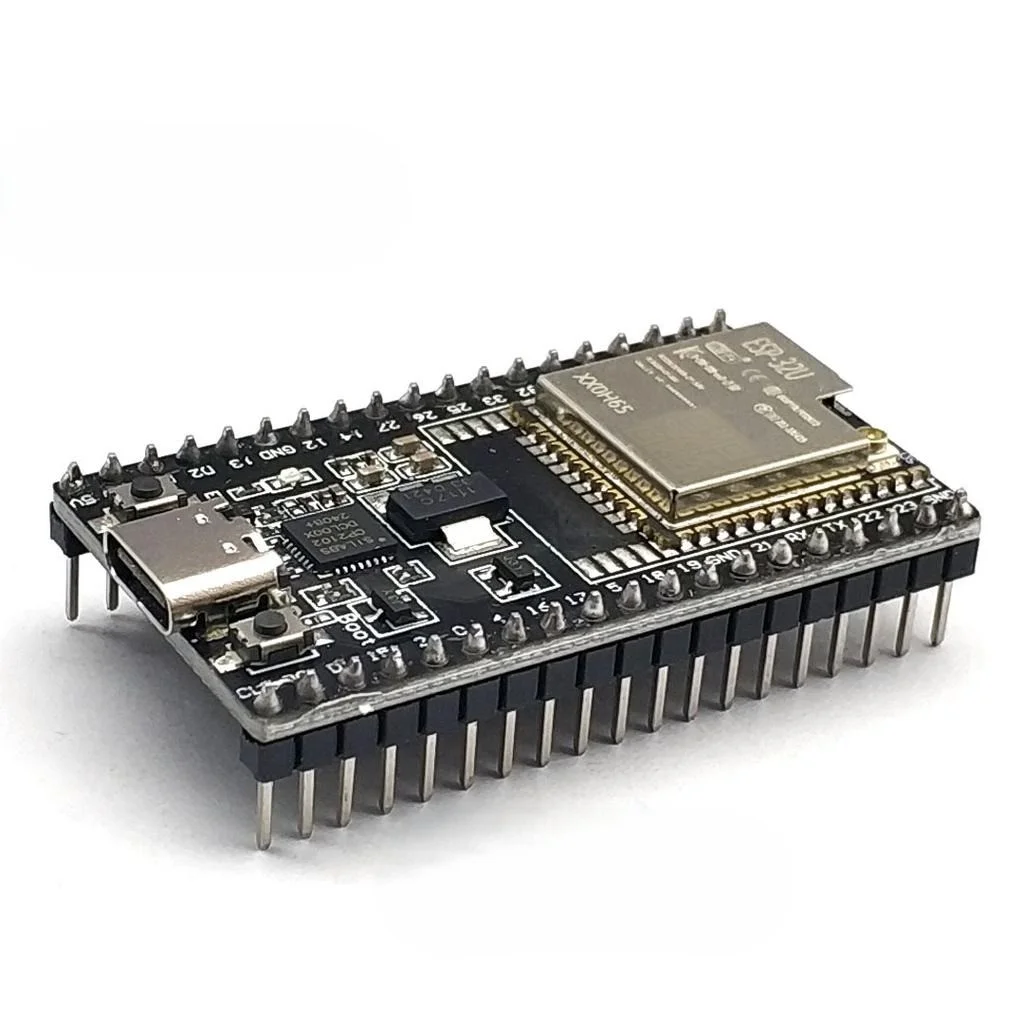
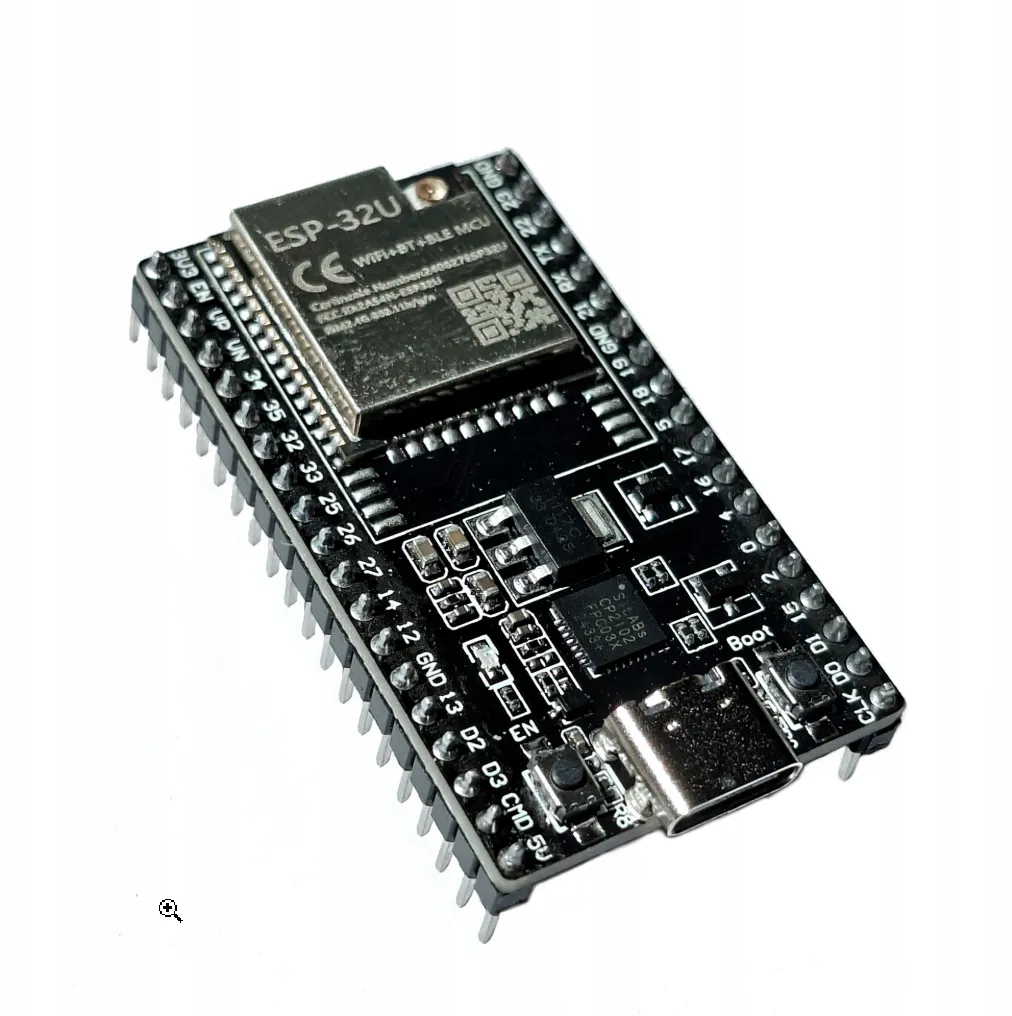
The ESP32U WiFi + BLE Bluetooth Board Type-C (38 Pin) is a compact, high-performance development board built around the ESP32 microcontroller. It integrates 2.4 GHz Wi-Fi and Bluetooth Low Energy to support wireless IoT, smart home, and automation projects. With a USB Type-C connector and pre-soldered header pins, the board is ready for rapid prototyping and educational use.
Key Features
- Dual connectivity: Wi-Fi (802.11 b/g/n) and Bluetooth Low Energy (BLE) for flexible wireless communication
- USB Type-C interface for reliable power delivery and easy programming
- 38 GPIO pins provide broad interfacing options for sensors, actuators, displays, and modules
- Pre-soldered headers for plug-and-play compatibility with breadboards and jumper wires
- High-performance dual-core ESP32 processor for multitasking and real-time control
- Wide software support including Arduino IDE, ESP-IDF, and MicroPython
Technical Specifications
- Microcontroller: ESP32 dual-core
- Wireless: Wi-Fi 2.4 GHz (802.11 b/g/n) and Bluetooth Low Energy (BLE)
- USB Interface: USB Type-C (power and programming)
- GPIO: 38 pins
- Operating voltage: 3.3 V (logic)
- Input power: 5 V via USB
- Maximum clock speed: up to 240 MHz
- Flash memory: typically 4 MB
- Programming support: Arduino IDE, ESP-IDF, MicroPython
Compatible Software and Tools
- Arduino IDE: easy entry for beginners with many community libraries
- ESP-IDF: Espressif official framework for advanced applications and optimization
- MicroPython: lightweight Python runtime for quick scripting and education
- Serial monitor and common USB-C flashing tools supported on Windows, macOS, and Linux
Applications
- IoT and smart home devices (sensors, switches, gateways)
- Wireless sensor networks and data loggers
- Home automation and remote monitoring systems
- Robotics, motor control, and automation projects
- Educational platforms and prototyping in classrooms and labs
Advantages
- Ready-to-use board with pre-soldered headers speeds up prototyping
- Reliable, fast wireless connectivity with both Wi-Fi and BLE
- Compact design with extensive I/O for versatile hardware projects
- Large community and abundant libraries make development faster
Safety and Handling
- Power the board using a regulated 5 V USB supply via the Type-C port
- Do not apply voltages above 3.3 V to GPIO pins to avoid damage
- Observe electrostatic discharge (ESD) precautions when handling the board
Getting Started
- Connect the board to your computer using a USB Type-C cable and a regulated 5 V port.
- Install the required drivers if prompted by your operating system.
- Select the ESP32 board in Arduino IDE or set up ESP-IDF/MicroPython toolchain.
- Upload a sample sketch or MicroPython script to test Wi-Fi and GPIO functionality.
Frequently Asked Questions
- Can I power external sensors from the board? For low-current sensors, power from the 3.3 V output is possible. Check the sensor current requirements and avoid drawing excessive current from the board regulator.
- Which development environments are supported? Arduino IDE, ESP-IDF, and MicroPython are all supported, allowing flexibility from beginner to advanced development workflows.
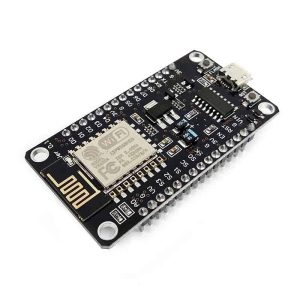
Note: Images are for illustration only. Actual board layout, markings, and components may vary slightly.



Reviews
There are no reviews yet