
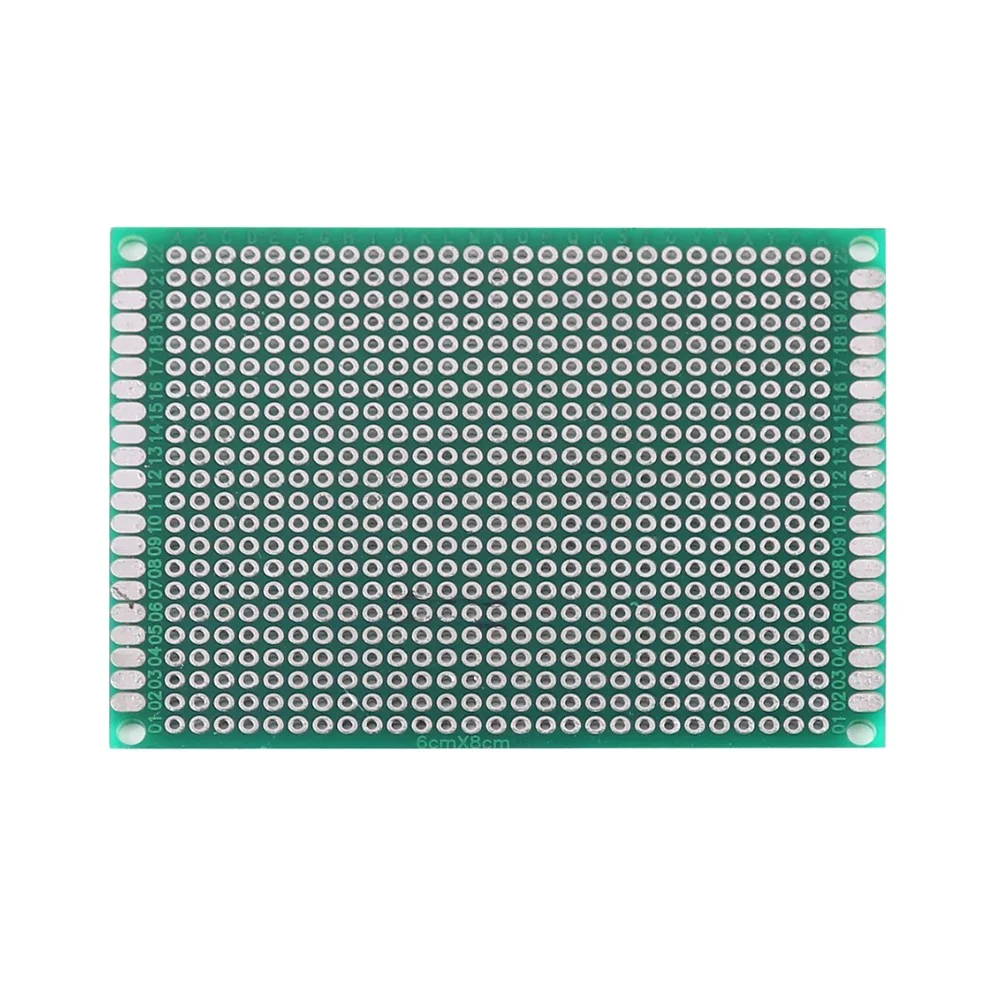

The 6×8cm Double-Sided Fiber Glass Veroboard is a high-quality general-purpose PCB prototyping board designed for building permanent electronic circuits. Made from durable FR4 fiberglass material, it features copper pads on both sides, allowing more flexible routing and improved circuit density compared to single-sided boards.
This board is ideal for DIY electronics, circuit development, repairs, and educational projects, providing a reliable platform for soldering components securely.
Key Features
- Double-Sided Copper Layer: Pads available on both sides for better connectivity
- FR4 Fiber Glass Material: Strong, heat-resistant, and durable
- Standard 2.54mm Pitch: Compatible with most electronic components and ICs
- Compact Size (6×8cm): Suitable for medium-sized projects
- Green Solder Mask: Provides insulation and prevents short circuits
- Pre-Drilled Holes: Easy component placement and soldering
- High Reliability: Ideal for long-term circuit use
Technical Specifications
- Board Type: Veroboard / Perfboard
- Dimensions: 6 × 8 cm (60 × 80 mm)
- Material: FR4 Fiber Glass
- Copper Layer: Double-sided
- Hole Pitch: 2.54 mm (0.1 inch)
- Hole Diameter: ~1 mm (typical)
- Board Thickness: ~1.6 mm
- Surface Finish: HASL (Hot Air Solder Leveling) or similar
- Color: Green
Working Structure
- Each hole is surrounded by a copper pad on both sides
- Components are inserted through holes and soldered
- Connections are made using:
- Solder bridges
- Jumper wires
- Copper tracks (if pre-patterned)
This allows flexible circuit creation similar to a custom PCB.
Applications
- Permanent circuit prototyping
- Arduino and microcontroller projects
- Power supply circuits
- Amplifier and analog circuits
- Repair and modification work
- Educational electronics labs
Advantages
- Stronger than phenolic boards (does not bend easily)
- Better heat resistance during soldering
- Supports double-sided routing
- Long-lasting and reliable connections
- Professional-looking circuit builds
Usage Tips
- Use a fine-tip soldering iron (25W–60W)
- Plan layout before soldering components
- Use jumper wires for complex connections
- Avoid excessive heat to protect pads
- Clean flux residue for better finish
Note: Images are for Illustration Purposes Only.
Category: Accessories




Reviews
There are no reviews yet