
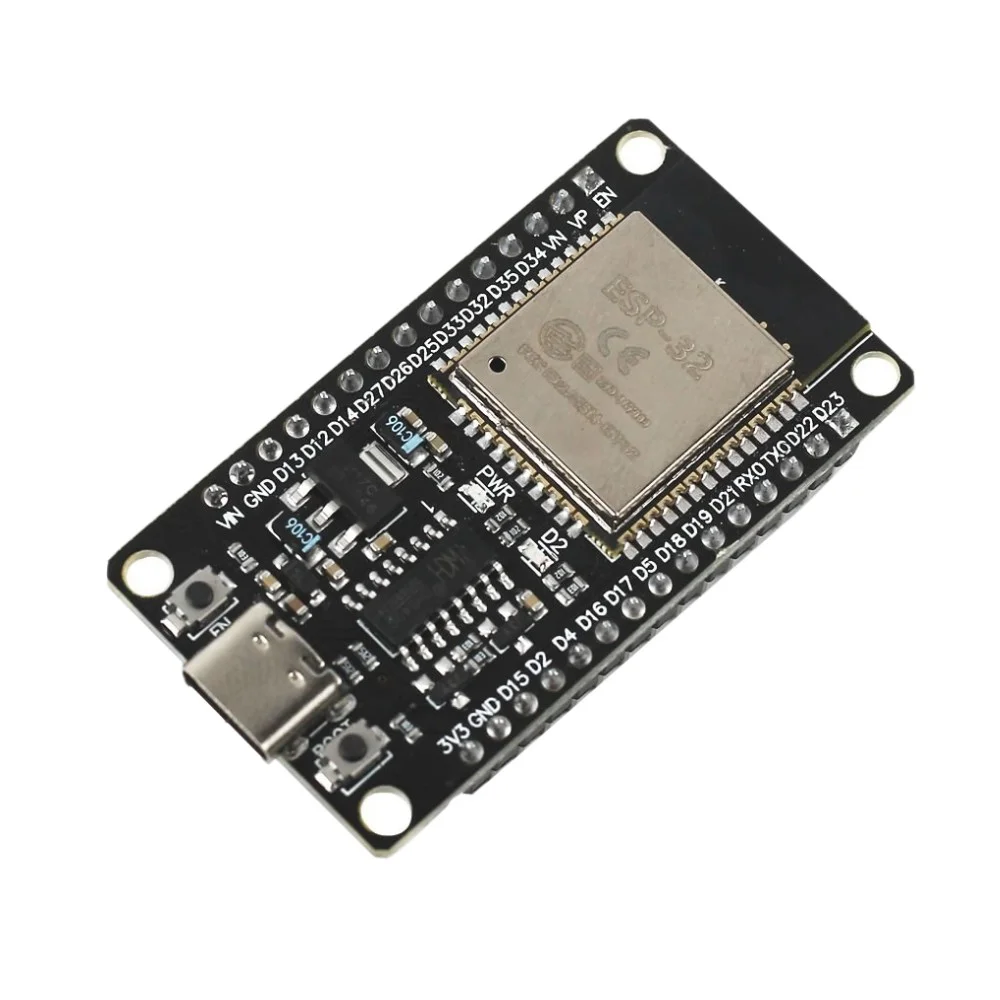
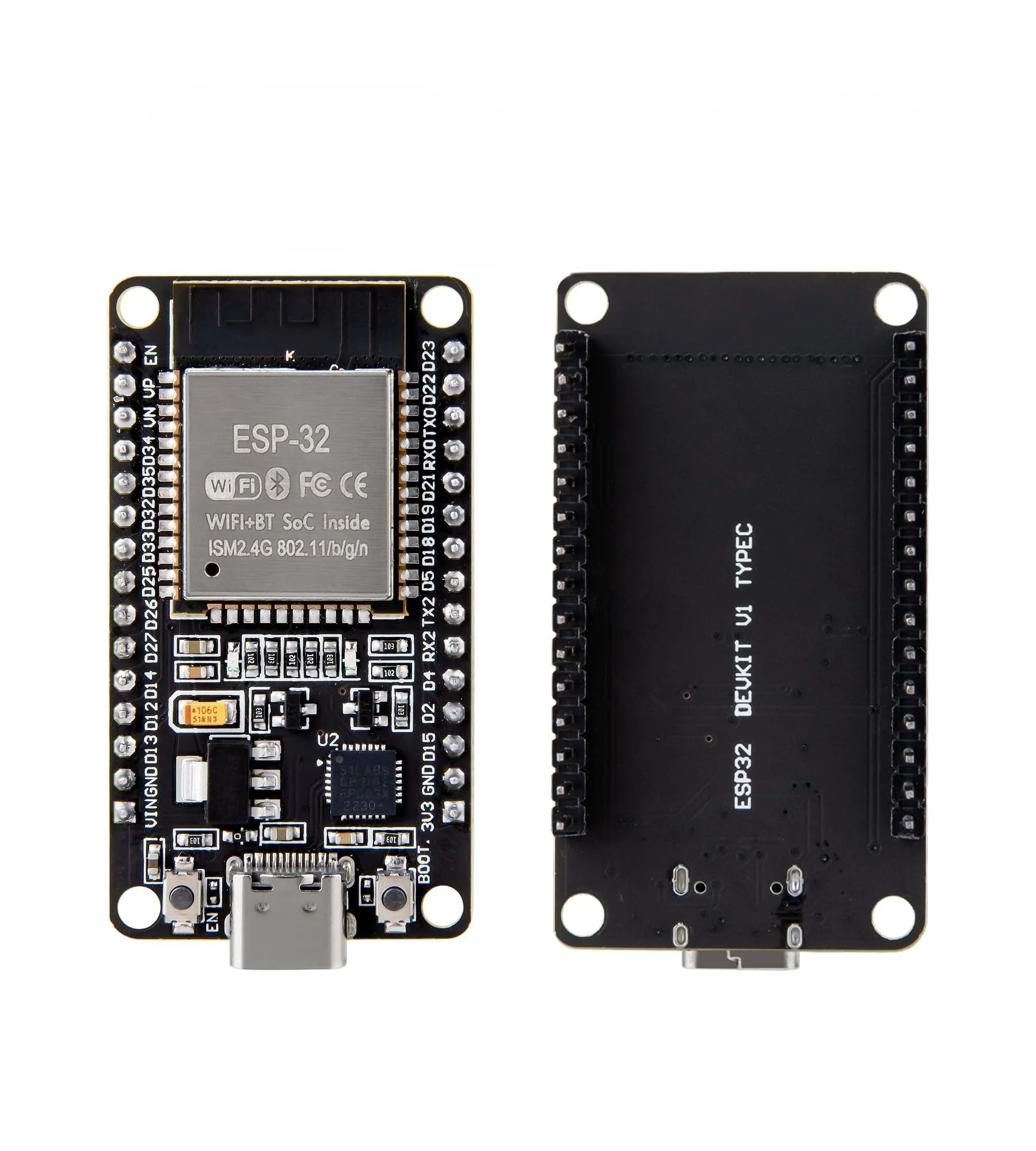

ESP32 WiFi + Bluetooth Board Type-C (30 Pin) (Solderless) Overview
The ESP32 WiFi + Bluetooth Board Type-C (30 Pin) is a compact and versatile development module built around the powerful ESP32 microcontroller. With integrated Wi-Fi and Bluetooth connectivity and a modern USB Type-C interface, this solderless 30-pin board is optimized for beginners, educators, and professionals who need a fast, breadboard-friendly solution for Internet of Things (IoT) and embedded projects.
Key Features
- Dual wireless connectivity: Wi-Fi 802.11 b/g/n (2.4 GHz) and Bluetooth (Classic and BLE) for flexible communications.
- USB Type-C interface for convenient, reversible connection for power and programming.
- Solderless 30-pin layout designed for direct breadboard use or jumper wire connections.
- High-performance ESP32 dual-core MCU capable of up to 240 MHz clock speed for real-time tasks and multitasking.
- Wide software compatibility: supports Arduino IDE, ESP-IDF, and MicroPython to suit different development preferences.
Technical Specifications
- Microcontroller: ESP32 dual-core MCU
- Wireless Connectivity: Wi-Fi 802.11 b/g/n (2.4 GHz), Bluetooth Classic and BLE
- USB Interface: USB Type-C for power and programming
- GPIO: 30 pins (solderless layout)
- Operating Voltage: 3.3 V (logic)
- Input Voltage: 5 V via USB Type-C
- Clock Speed: Up to 240 MHz
- Flash Memory: Typically 4 MB (may vary by batch)
- Programming Support: Arduino IDE, ESP-IDF, MicroPython
Supported Development Environments
- Arduino IDE: Easy-to-use libraries and vast community resources.
- ESP-IDF: Official Espressif development framework for advanced control and performance tuning.
- MicroPython: Lightweight Python runtime for rapid scripting and education.
Common Applications
- IoT devices and smart home systems
- Wireless sensor networks and remote monitoring
- Home automation controllers and gateways
- Robotics and embedded control systems
- Data logging and cloud-connected devices
- Educational labs, prototyping, and training projects
Advantages
- Small form factor that packs powerful wireless and compute capabilities.
- Solderless design provides flexible mounting and easy swapping during prototyping.
- Reliable wireless performance backed by a strong community and ecosystem.
- Multiple programming options let you choose the workflow that fits your skills.
Getting Started
- Connect the board to your computer with a USB Type-C cable and a stable 5 V supply.
- Install the appropriate drivers and board package for Arduino IDE or configure ESP-IDF/MicroPython.
- Select the correct board and COM port, then upload a test sketch or MicroPython script.
- Use the 3.3 V logic level on GPIOs and follow the pin mapping for your sensors and actuators.
Pinout and Wiring Notes
The board uses a 30-pin solderless layout designed for breadboard and jumper connections. Pin labeling and exact placement can vary slightly between manufacturing batches. Verify pin functions before wiring high-current loads or connecting sensitive peripherals.
Safety and Handling
- Use a stable 5 V USB supply to power the board.
- Do not apply more than 3.3 V to any GPIO pin.
- Observe proper ESD precautions when handling the module.
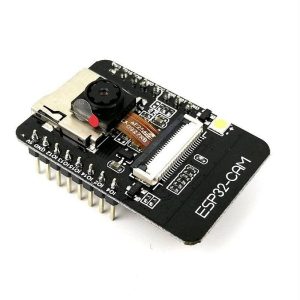
Note: Images are for illustration purposes only. Actual board layout, pin arrangement, and component placement may vary slightly.




Reviews
There are no reviews yet